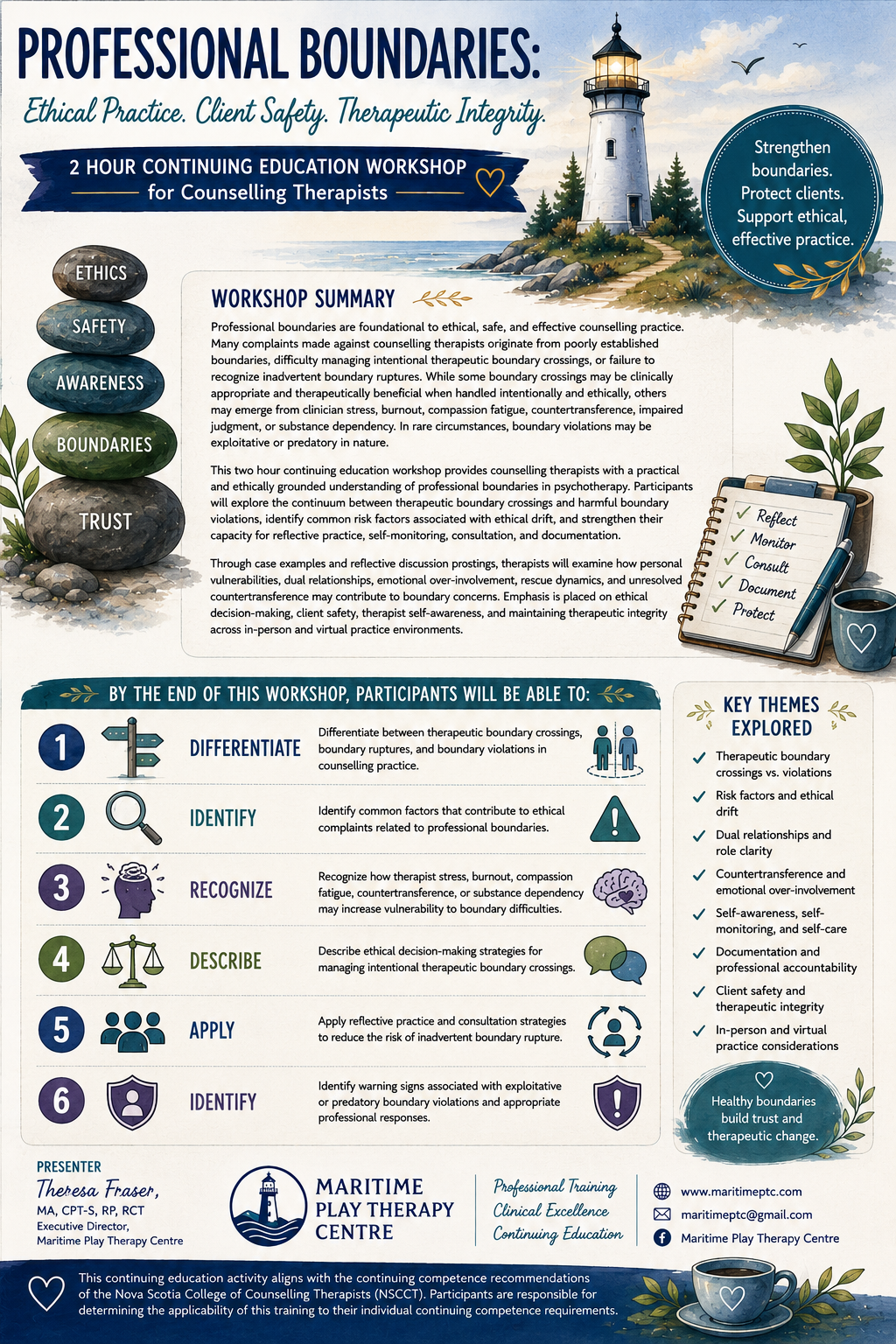
While not always front-of-mind in daily clinical practice, a solid working knowledge of the judicial, legislative, regulatory, and ethical framework within which counselling therapists practise is essential to professionalism, client welfare, and public protection. This module introduces counselling therapists to the legal and professional responsibilities that shape practice in Nova Scotia, including the Counselling Therapists Act, NSCCT regulatory expectations, professional conduct processes, scope of practice, title protection, informed consent, confidentiality, documentation, duty to report, competence, supervision, consultation, and ethical decision-making. Participants will examine how provincial legislation, regulatory standards, and the Canadian Counselling and Psychotherapy Association Code of Ethics and Standards of Practice inform daily clinical decisions. Emphasis is placed on translating legal and ethical expectations into practical safeguards that protect clients, support accountable practice, and reduce professional risk.
This two-hour continuing education workshop introduces counselling therapists to the concepts of Islamophobia, anti-discriminatory practice, cultural humility, and allyship within the therapeutic relationship. Participants will examine how personal assumptions, implicit bias, systemic discrimination, and societal narratives may influence clinical interactions and therapeutic outcomes. Using the Government of Canada's Canadian Guide to Understanding and Combatting Islamophobia, therapists will explore practical strategies for creating culturally safe and inclusive counselling environments for Muslim clients. The workshop emphasizes ethical practice, cultural responsiveness, social justice, and client-centred care consistent with professional standards and anti-oppressive counselling approaches
By the end of this workshop, participants will be able to:
Describe Islamophobia in the Canadian Context
Describe the nature, manifestations, and impacts of Islamophobia on individuals, families, communities, and mental health outcomes within Canada.
Bias and Discrimination in Clinical Practice
Identify how implicit bias, stereotypes, discrimination, and systemic barriers may affect therapeutic relationships and access to mental health services for Muslim clients.
Apply Anti-Discriminatory and Culturally Responsive Practices
Apply principles of cultural humility, anti-oppressive practice, and inclusive counselling approaches when working with Muslim clients and communities.
Strengthen Ethical and Socially Just Practice
Examine the ethical responsibilities of counselling therapists related to equity, diversity, inclusion, cultural responsiveness, advocacy, and client welfare.
Create Inclusive Therapeutic Environments
Develop practical strategies for fostering culturally safe, respectful, and welcoming counselling environments that support trust, belonging, and client well-being.
Anti-Racist and Anti-Discriminatory Practice: Intergeneratioal trauma
|
The CCPA Code of Ethics and Standards of Practice call on counselling therapists to promote social justice, the equitable distribution of resources, and act to reduce barriers and expand choice for all persons, with special regard for those who are marginalized, disadvantaged, vulnerable or have exceptional needs. The goal of this requirement is to support anti-oppressive practice, and to ensure that every counselling therapist can provide person-centered services with diverse communities that are culturally safe, humble, competent, responsive, and appropriate. |
|
|
-
training regarding inter-generational trauma

Anti-Racist and Anti-Discriminatory Practice: 2SLGBTQIA+
|
Registrants must accrue a minimum of 1 hour of Structured Learning or 2 hours of Self Study in this area. The CCPA Code of Ethics and Standards of Practice call on counselling therapists to promote social justice, the equitable distribution of resources, and act to reduce barriers and expand choice for all persons, with special regard for those who are marginalized, disadvantaged, vulnerable or have exceptional needs. The goal of this requirement is to support anti-oppressive practice, and to ensure that every   |
|
counselling therapist can provide person-centered services with diverse communities that are culturally safe, humble, competent, responsive, and appropriate. Approved topic areas include: |
2SLGBTQIA+
.
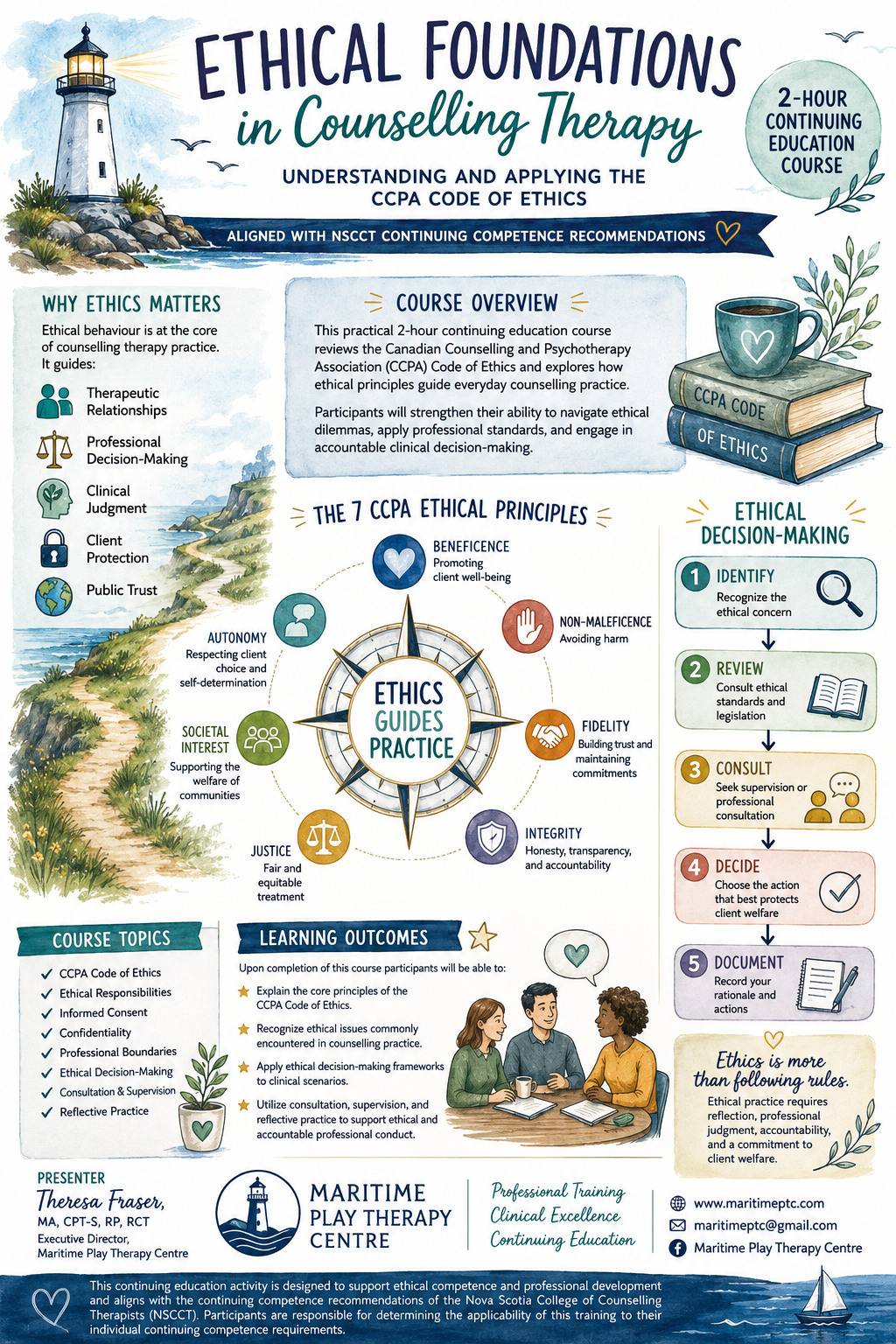
|
Professional Ethics |
|
Ethical behaviour is at the core of counselling therapy practice and forms the basis of the therapeutic relationship. It is part of everyday decision making, and paramount to guiding actions. We will review the CCPA Code of Ethics for Therapists. |
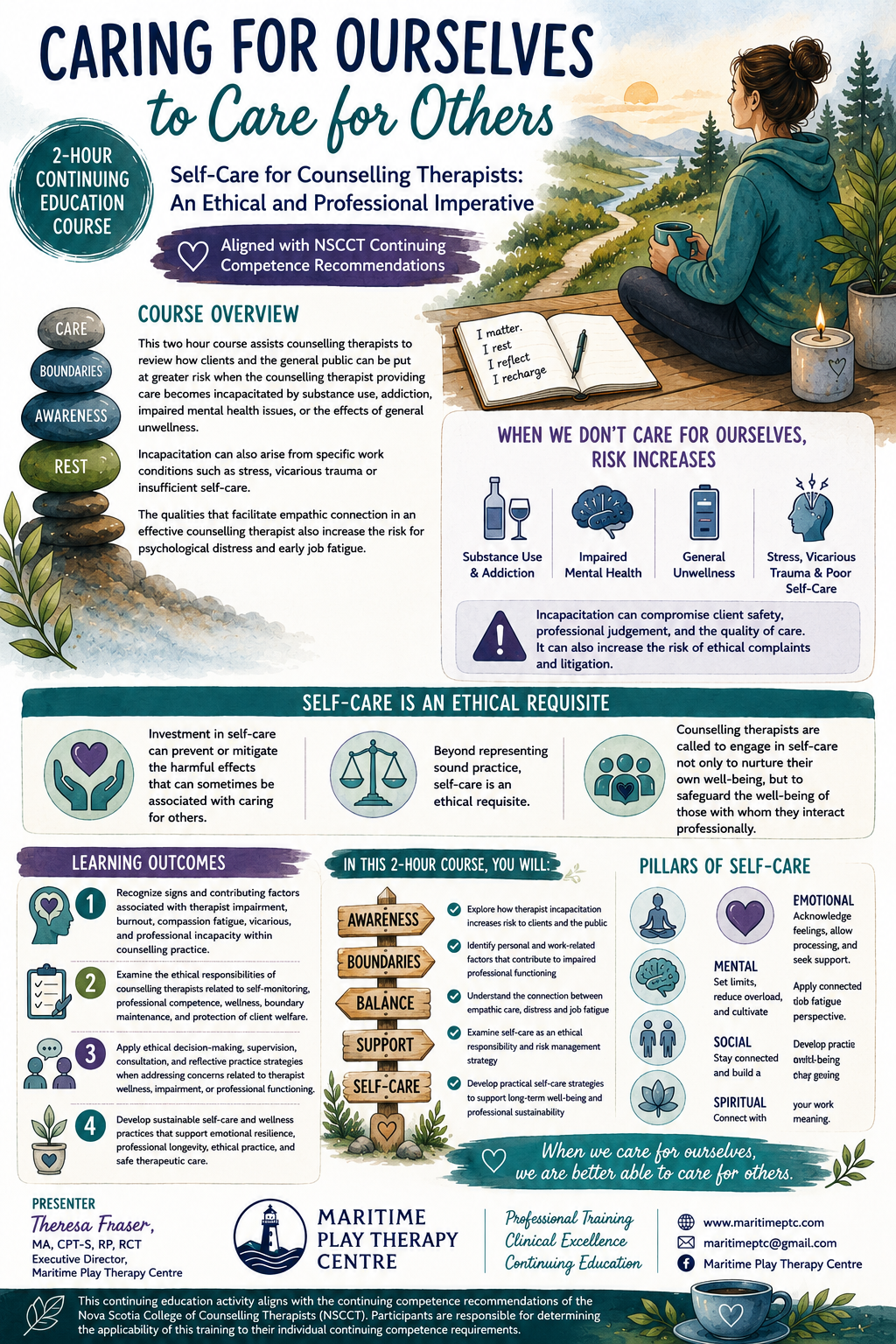
This two hours course assists the counselling therapists to review how clients and the general public can be put at greater risk when the counselling therapist providing care becomes incapacitated by substance use, addiction, impaired mental health issues, or the effects of general unwellness. Incapacitation can also arise from specific work conditions such as stress, vicarious trauma or insufficient self-care. The qualities that facilitate empathic connection in an effective counselling therapist also increase the risk for psychological distress and early job fatigue. Investment in self-care can prevent or mitigate the harmful effects that can sometimes be associated with caring for others.Beyond representing sound practice, self-care is an ethical requisite. Counselling therapists are called to engage in self-care not only to nurture their own well-being, but to safeguard the well-being of those with whom they interact professionally. Attention to self-care also may reduce the risk of ethical complaints and litigation.