-
Welcome
Welcome to CE Learning with Maritime Play Therapy Centre.
This site has a variety of continuing ed courses of interest to Therapists, Play Therapists, Foster Parents or Child and Youth Care Practitioners.
Please click on the course you are interested in and you will be taken to the e commerce site where you can pay for the course and then complete it at your own pace.
If you have any challenges, please email maritimeptc@gmail.com
Available courses

This 40 hour Basic Training meets EMDRIA requirements and once participants also complete 10 hours of consultation they will be eligible to become EMDRIA EMDR Certified.
Program Description
Many adult clients enter therapy presenting with concerns such as anxiety, relationship difficulties, emotional dysregulation, perfectionism, or chronic feelings of shame without recognizing how these patterns may be rooted in early attachment experiences. Attachment patterns formed in early caregiving relationships shape how individuals regulate emotion, perceive safety, connect with others, and understand themselves.
This 6-hour experiential workshop provides therapists with a practical framework for recognizing attachment-related patterns in adult clients who may not initially identify their difficulties as attachment-based. Participants will explore how early relational experiences influence adult coping strategies, interpersonal relationships, and internal working models.
Through case examples, reflective exercises, clinical discussion, and applied interventions, therapists will develop skills to identify attachment dynamics, conceptualize client struggles through an attachment lens, and introduce therapeutic interventions that support relational repair and emotional integration.
This training is appropriate for counsellors, psychotherapists, social workers, psychologists, and other mental health professionals who work with adult clients.
Learning Outcomes
-
Describe the core principles of attachment theory and the development of internal working models.
-
Explain how early relational experiences influence adult emotional regulation, relationship patterns, and identity development.
-
Identify common presenting issues in adult therapy that may reflect underlying attachment disruptions.
-
Apply attachment-informed case conceptualization to adult client scenarios.
-
Analyze adult relational patterns through the lens of attachment strategies (secure, anxious, avoidant, disorganized).
-
Differentiate between trauma responses and attachment adaptations in adult client behaviour.
-
Evaluate therapeutic interventions that support attachment repair in adult psychotherapy.
Develop attachment-informed therapeutic responses and interventions that increase emotional safety and relational awareness in adult clients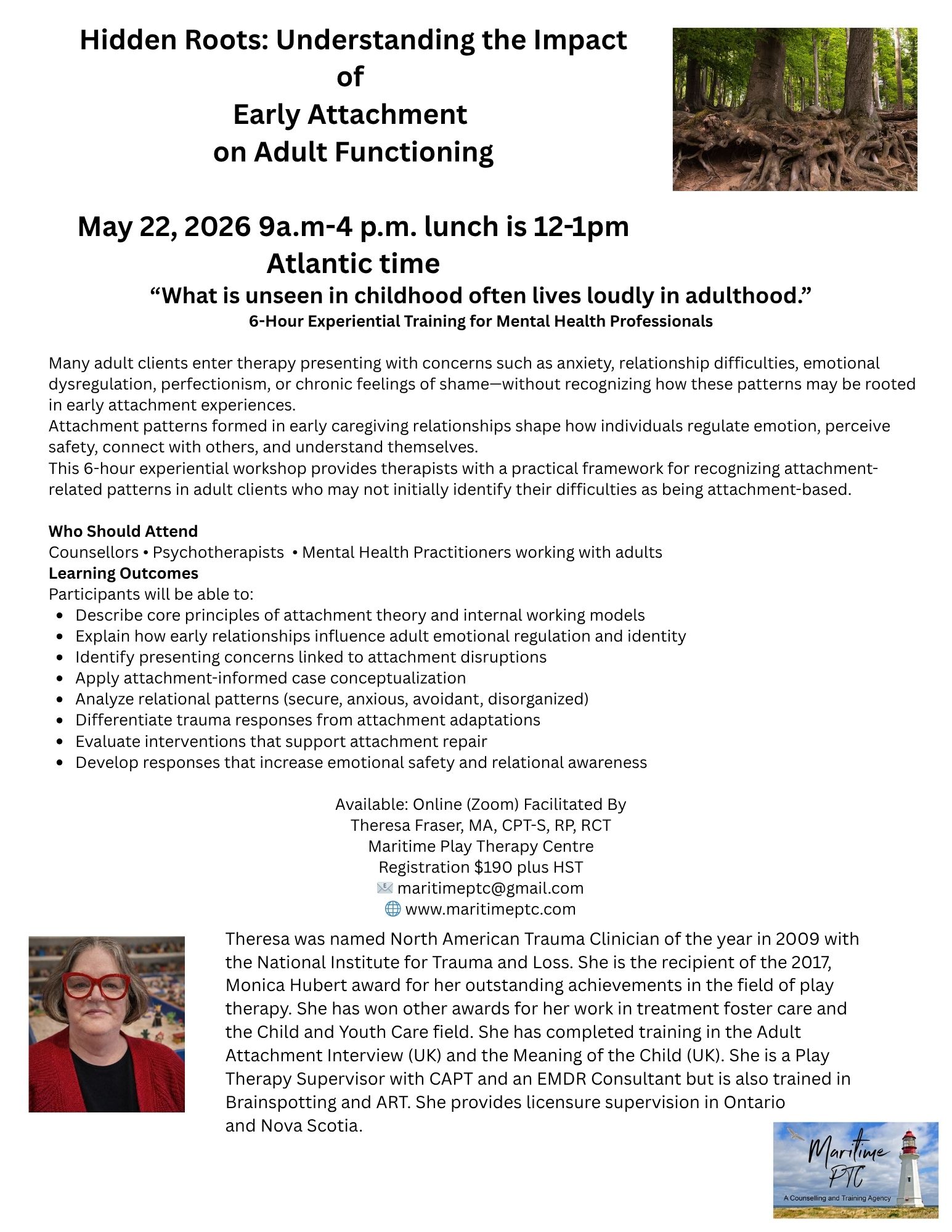
Course Description
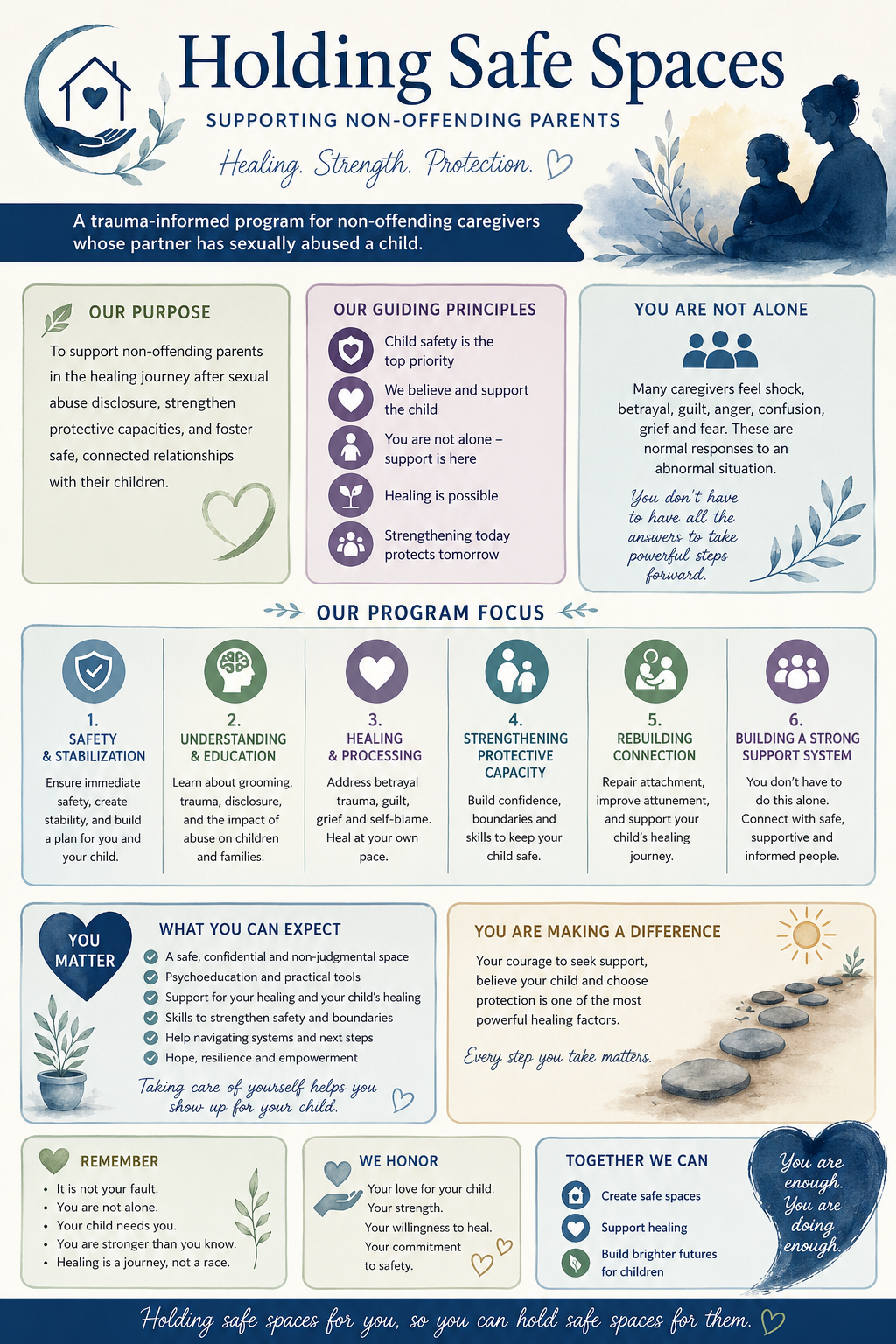
When a child discloses sexual abuse by a parent or caregiver, non-offending caregivers are often left navigating overwhelming experiences of shock, betrayal, grief, fear, guilt, confusion, and family disruption while simultaneously being asked to provide safety, stability, and emotional support for the child. Clinicians working with these families require specialized knowledge and trauma-informed intervention skills to effectively support both caregiver healing and child protection.
This training provides mental health professionals, social workers, victim service providers, and allied professionals with a comprehensive understanding of the complex dynamics involved in working with non-offending caregivers following intrafamilial child sexual abuse disclosure. Participants will explore grooming dynamics, family system patterns, attachment disruptions, trauma responses, protective caregiving capacities, and the emotional impact of disclosure on children and caregivers.
Using a trauma-informed, attachment-focused, and strengths-based framework, this course examines how clinicians can support caregiver stabilization, psychoeducation, emotional regulation, protective parenting, and relational repair while maintaining child safety as the central priority. Participants will also explore risk indicators, boundary violations, multidisciplinary collaboration, safety planning, mandatory reporting considerations, and culturally responsive approaches to intervention.
Through case examples, reflective discussion, and practical clinical tools, participants will gain increased confidence in assessing protective capacities, responding to caregiver distress, supporting healing conversations, and facilitating safe, compassionate, and accountable care within highly complex family systems.
This training is appropriate for therapists, counsellors, social workers, child protection professionals, victim service providers, school-based clinicians, and other helping professionals working with children, youth, and families impacted by sexual abuse.
Upon completion of this training, participants will be able to:
- Identify the dynamics, risk indicators, and grooming patterns commonly associated with intrafamilial child sexual abuse using a trauma-informed and developmentally responsive lens.
- Explain the emotional, behavioral, attachment-related, and neurobiological impacts of child sexual abuse disclosure on children, non-offending caregivers, and family systems.
- Assess caregiver protective capacities, safety concerns, boundary violations, and family system dynamics utilizing trauma-informed clinical assessment strategies and professional risk indicators.
- Demonstrate effective trauma-informed responses and psychoeducational interventions that support non-offending caregivers while prioritizing child safety, stabilization, and emotional regulation.
- Apply attachment-focused, culturally responsive, and strengths-based interventions to support caregiver-child relational repair, resilience, and long-term healing following disclosure.
- Develop collaborative treatment and safety planning strategies that integrate multidisciplinary systems, ethical responsibilities, mandatory reporting requirements, and ongoing protective caregiving supports.

Counselling Children and Youth Certificate - Module 1: Intake, Assessment, Consent and Documentation

This 48 hour online certificate is for newly graduated therapists and counsellors who want to work with children/youth.
At the end of this certificate participants will:
- Review theoretical base of psychotherapeutic counselling
- Review social and emotional development of young people.
- Explore the ethical and professional aspects of working therapeutically with children and adolescents
- Work therapeutically with children and young using the arts and play.
Participants need to have access to internet and a computer to access modules in the learning management system
Module 1: Intake, Assessment, Consent and Documentation

This 48 hour online certificate is for newly graduated therapists and counsellors who want to work with children/youth.
At the end of this certificate participants will:
- Review theoretical base of psychotherapeutic counselling
- Review social and emotional development of young people.
- Explore the ethical and professional aspects of working therapeutically with children and adolescents
- Work therapeutically with children and young using the arts and play.
Participants need to have access to internet and a computer to access modules in the learning management system

This 48 hour online certificate is for newly graduated therapists and counsellors who want to work with children/youth.
At the end of this certificate participants will:
- Review theoretical base of psychotherapeutic counselling
- Review social and emotional development of young people.
- Explore the ethical and professional aspects of working therapeutically with children and adolescents
- Work therapeutically with children and young using the arts and play.
Participants need to have access to internet and a computer to access modules in the learning management system
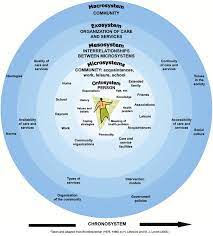
This 48 hour online certificate is for newly graduated therapists and counsellors who want to work with children/youth.
At the end of this certificate participants will:
- Review theoretical base of psychotherapeutic counselling
- Review social and emotional development of young people.
- Explore the ethical and professional aspects of working therapeutically with children and adolescents
- Work therapeutically with children and young using the arts and play.
Participants need to have access to internet and a computer to access modules in the learning management system

This 48 hour online certificate is for newly graduated therapists and counsellors who want to work with children/youth.
At the end of this certificate participants will:
- Review theoretical base of psychotherapeutic counselling
- Review social and emotional development of young people.
- Explore the ethical and professional aspects of working therapeutically with children and adolescents
- Work therapeutically with children and young using the arts and play.
Participants need to have access to internet and a computer to access modules in the learning management system

This 48 hour online certificate is for newly graduated therapists and counsellors who want to work with children/youth.
At the end of this certificate participants will:
- Review theoretical base of psychotherapeutic counselling
- Review social and emotional development of young people.
- Explore the ethical and professional aspects of working therapeutically with children and adolescents
- Work therapeutically with children and young using the arts and play.
Participants need to have access to internet and a computer to access modules in the learning management system

This 48 hour online certificate is for newly graduated therapists and counsellors who want to work with children/youth.
At the end of this certificate participants will:
- Review theoretical base of psychotherapeutic counselling
- Review social and emotional development of young people.
- Explore the ethical and professional aspects of working therapeutically with children and adolescents
- Work therapeutically with children and young using the arts and play.
Participants need to have access to internet and a computer to access modules in the learning management system

This 48 hour online certificate is for newly graduated therapists and counsellors who want to work with children/youth.
At the end of this certificate participants will:
- Review theoretical base of psychotherapeutic counselling
- Review social and emotional development of young people.
- Explore the ethical and professional aspects of working therapeutically with children and adolescents
- Work therapeutically with children and young using the arts and play.
Participants need to have access to internet and a computer to access modules in the learning management system
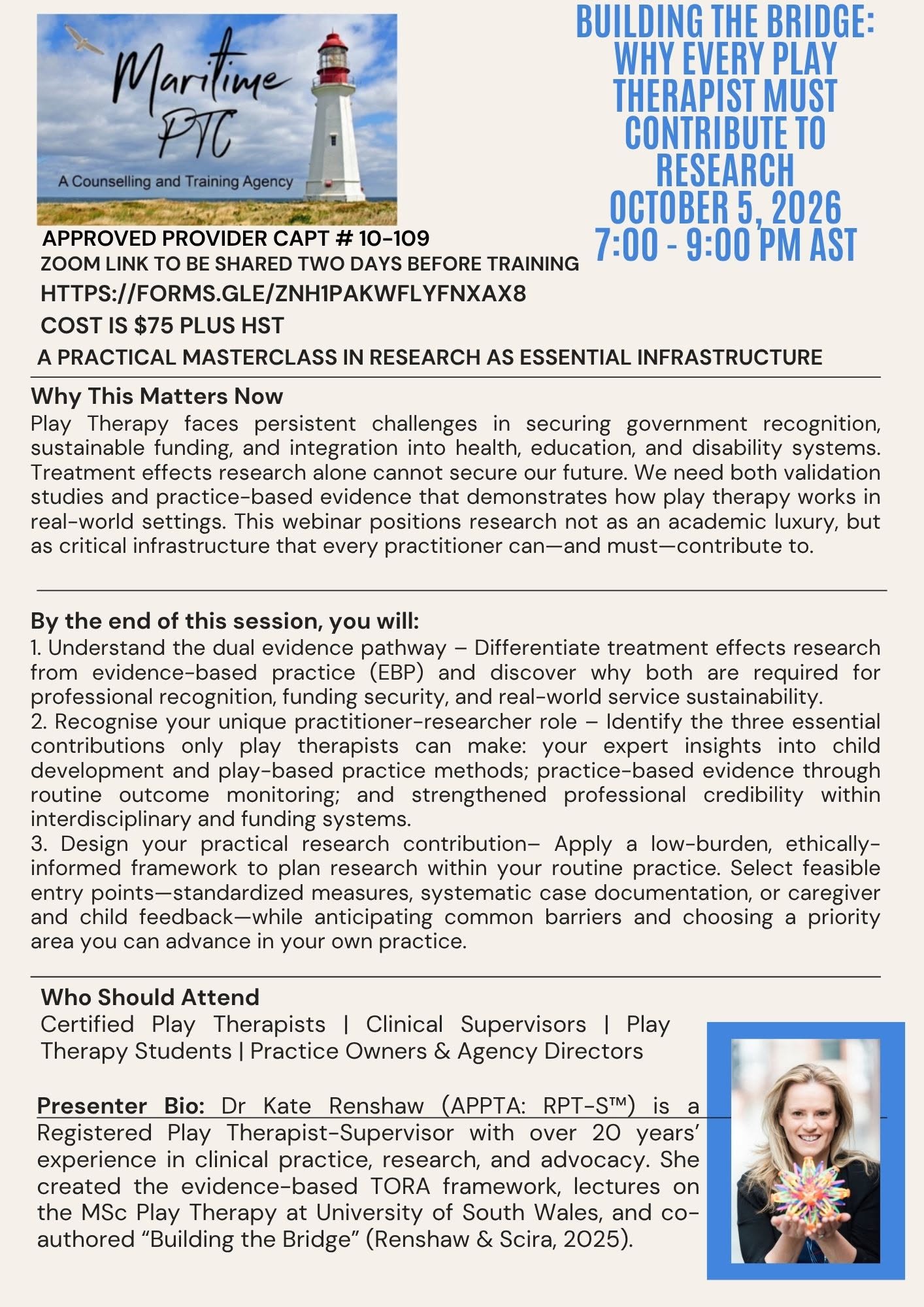
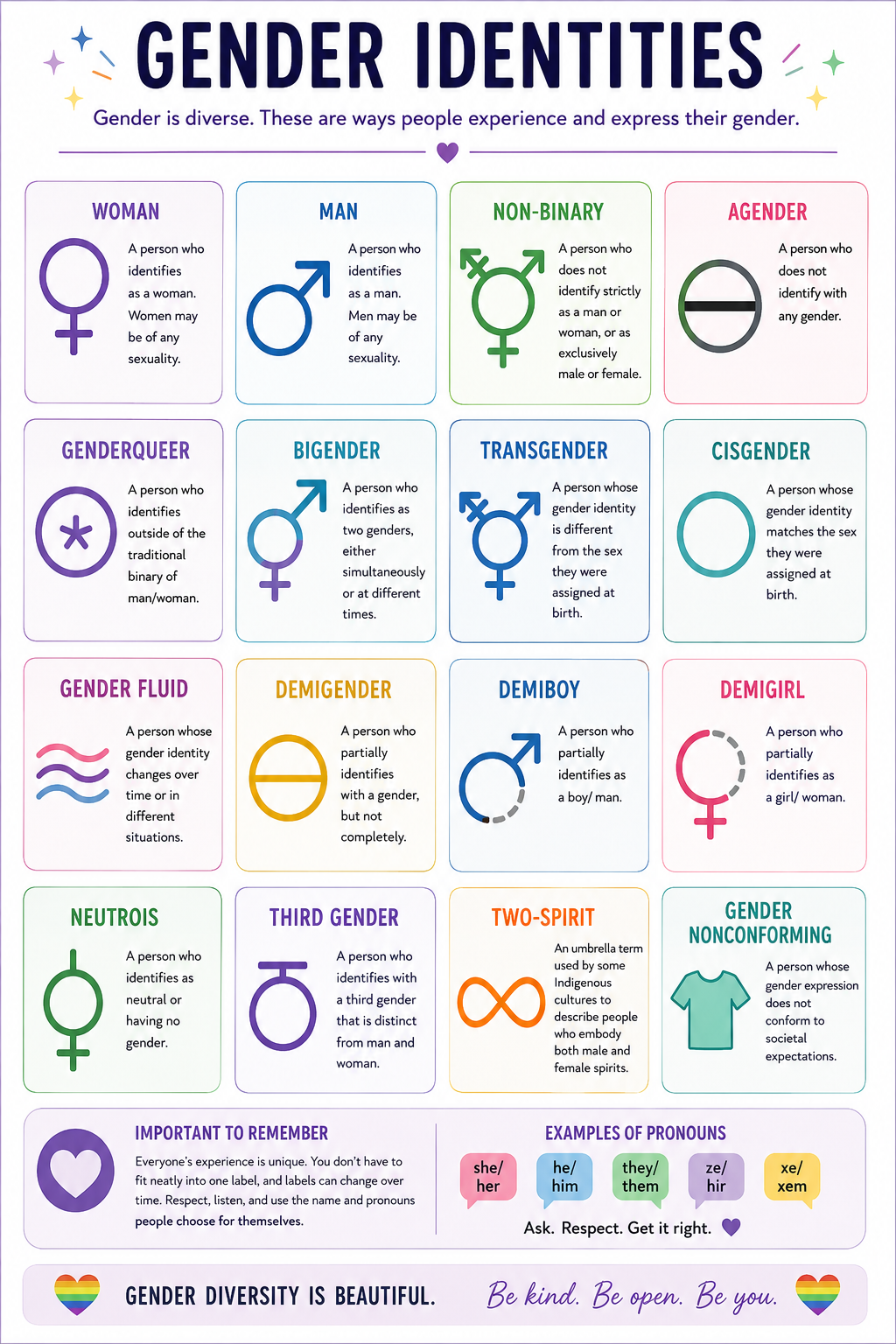
The World Professional Association for Transgender Health has specific standards of care and training protocols for those who provide care to children and adolescents who experience gender dysphoria. It is important however, for all therapists to be able to communicate verbally and non- verbally that gender expression is not binary.
This short training will assist therapists in assessing their therapy spaces, forms and practices to ensure that they are creating spaces for clients who may be questioning so they can feel safe in playing or exploring gender identity as well as being part of the LGBTQ+ Community.
Participants will be provided handouts in advance in order to review world-wide standards of care. They will also complete a self- screening practice assessment tool prior to the training.
Come prepared to complete a sandtray in dyads with a sandtray and a variety of miniatures on your end of the camera. You will leave hearing specific recommendations about how to make your therapy practice more inclusive.
Learning Outcomes:
· Play with and discuss own beliefs and attitudes about gender identity and gender expression using the sandtray and small group discussion
· Audit play therapy practice forms, spaces and healing tools for LGBTQ+ inclusion
· Identify ways to make your practice and play therapy spaces more LGBTQ+ inclusive.
· Engage in a gender activity recently published by the Australian medical community.
· Identify ways the play therapist can support families of questioning children and adolescents.
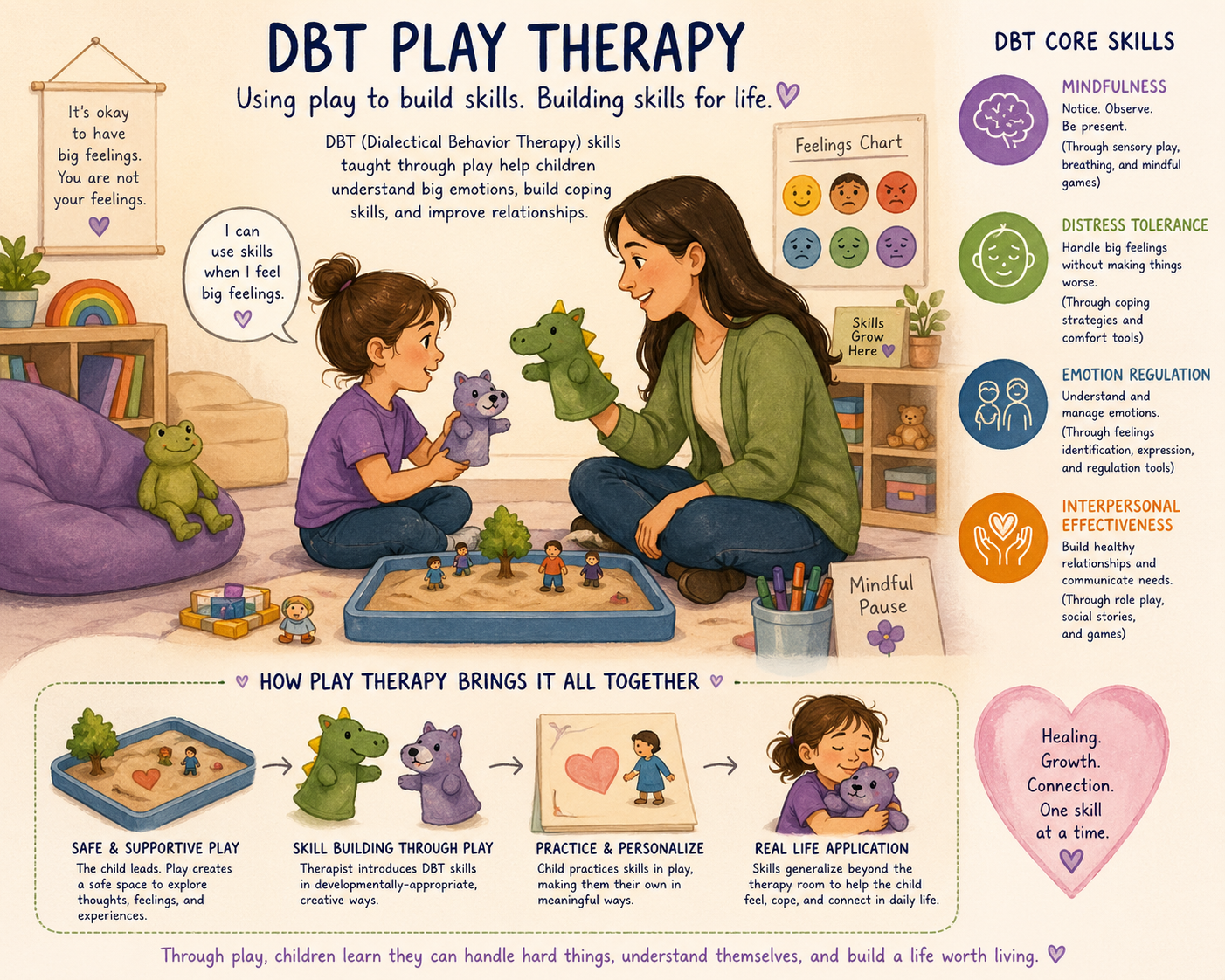
Integrating Dialectical Behavioural Concepts into your play therapy practice - DBPT
We can both accept ourselves for who we are while also accepting that change needs to happen (Linehan, 2015,p.5).
Adolescent and Adult clients can. utilize the sandtray as well as expressive modalities to communicate these dialectic realities while creating.a personal road map for change. This full day (6 hour) workshop will briefly review the treatment phases of Dialectical Behavioural Therapy while utilizing play therapy approaches to support DBT treatment.
Participants are expected to have taken prior DBT Training as this course does not certify participants in DBT or Marsha Linehan's method.
Learning Outcomes
After this training participants will:
Review DBT skills that can be integrated in individual PT or group PT therapy
Identify how the modules of mindfulness, interpersonal effectiveness, emotional regulation and distress tolerance can be integrated into their Play Therapy practice with sandtray, art based interventions, bibliotherapy, music, movement, affirmation cards and game play.
Utilize play therapy approaches in dyads, small and larger groups in order to gain confidence and competence in these DBT Areas
Identify resources or activities for DBPT they would like to further develop in order to continue to integrate DBT interventions formally or informally.
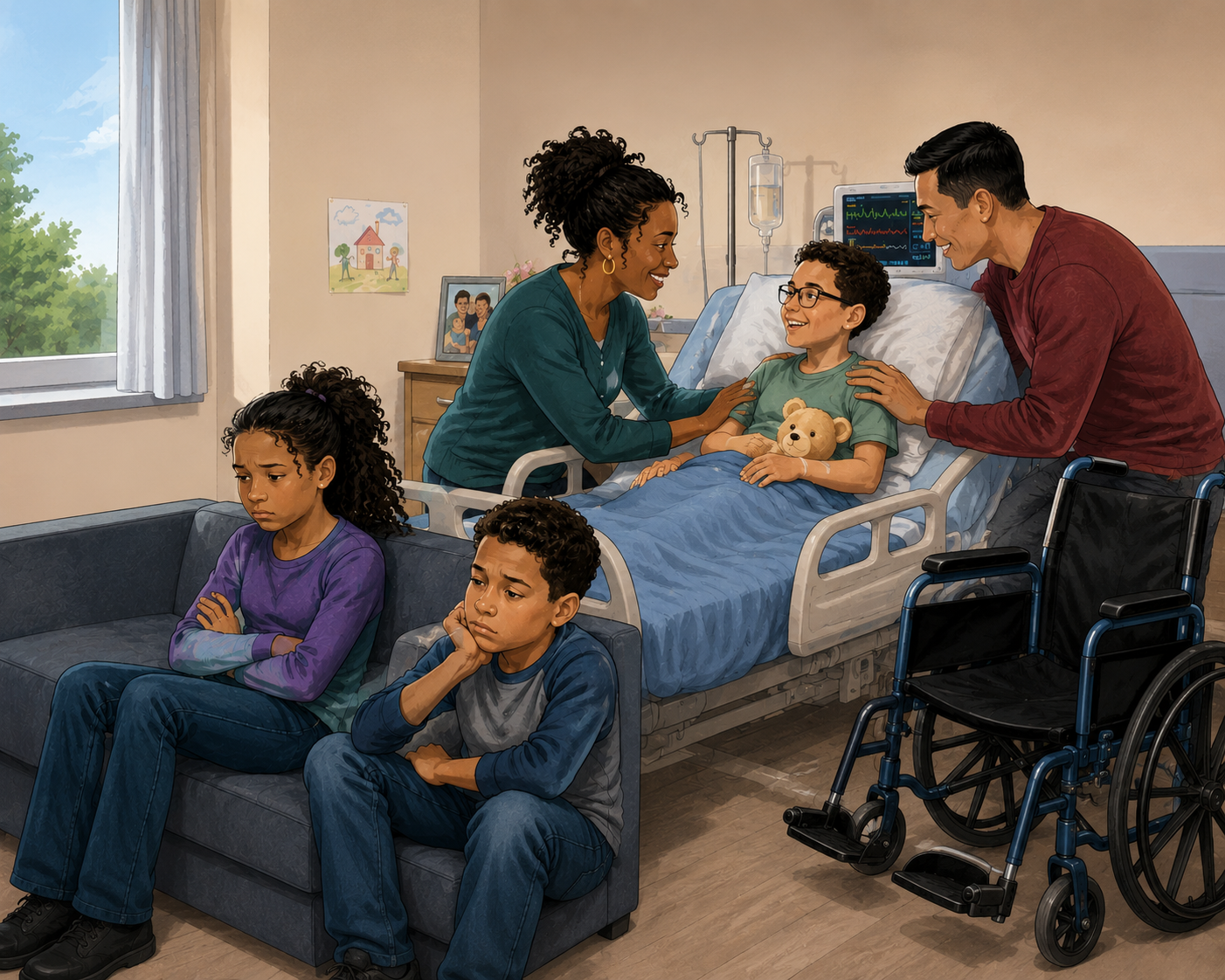
By the end of this training, participants will be able to
-
Define the concept of glass children and describe their unique psychosocial and developmental needs in play therapy. (Remembering / Understanding)
-
Explain the impact of family systems dynamics (e.g., parentification, invisibility, role assignment) on emotional development to be addressed in play therapy. (Understanding)
-
Analyze clinical presentations of glass children at the intake phase of play therapy. Design developmentally appropriate play-based interventions tailored to the needs of glass children. (Creating)
-
Identify IC-PTA competencies that are important to have and utilize when working with this population in play therapy.

 Course Description
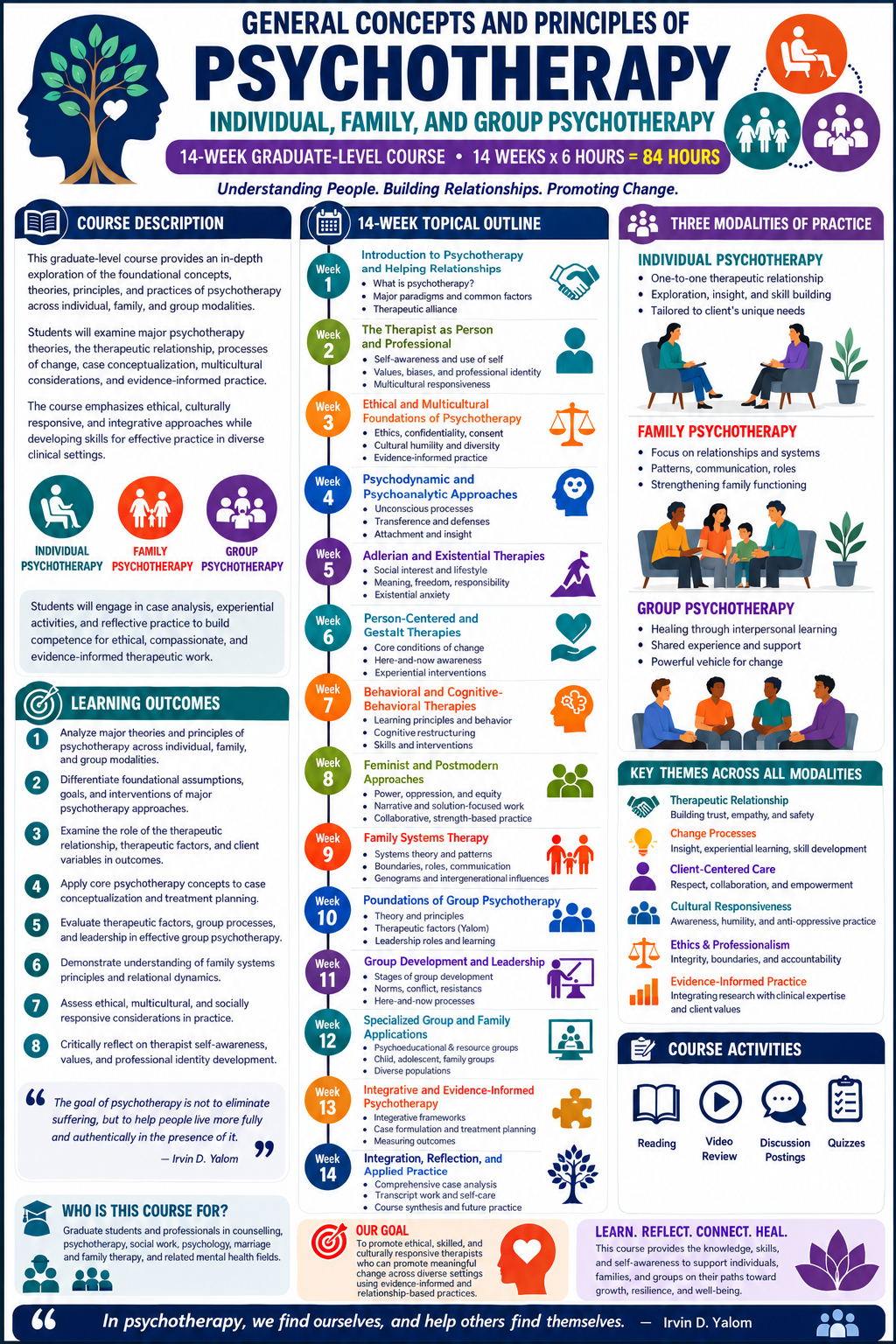
This graduate-level course provides students with a comprehensive introduction to the foundational concepts, theories, principles, and practices of psychotherapy across individual, family, and group modalities. Drawing from major psychotherapy traditions and integrative approaches, students will critically examine the therapeutic relationship, processes of change, case conceptualization, multicultural considerations, and evidence-informed psychotherapy practices.
The course introduces students to core psychotherapy theories including psychodynamic, Adlerian, existential, person-centered, Gestalt, cognitive-behavioral, feminist, postmodern, and family systems approaches while exploring the movement toward integrative psychotherapy practice. Emphasis is placed on understanding the therapeutic alliance, therapist self-awareness, ethical practice, multicultural responsiveness, and the mechanisms of therapeutic change across modalities.
Students will also examine foundational principles of group psychotherapy, including therapeutic factors, group cohesion, interpersonal learning, leadership, group development, and the role of the group as a therapeutic microcosm. Through experiential activities, case analysis, reflective practice, and applied clinical discussion, students will develop foundational competencies necessary for ethically and culturally responsive psychotherapy practice across diverse clinical contexts.
Course Learning Outcomes
By the end of this course, students will be able to:
-
Analyze major theories and principles of psychotherapy utilized in individual, family, and group practice.
-
Differentiate foundational assumptions, goals, therapeutic processes, and interventions associated with major psychotherapy models.
-
Examine the role of the therapeutic relationship, therapist factors, and client variables in psychotherapy outcomes.
-
Apply core psychotherapy concepts to case conceptualization and treatment planning across diverse clinical presentations.
-
Evaluate the therapeutic factors and interpersonal processes involved in effective group psychotherapy.
-
Demonstrate understanding of family systems principles and relational dynamics within psychotherapy practice.
-
Assess ethical, multicultural, and socially responsive considerations relevant to psychotherapy practice.
-
Critically reflect on therapist self-awareness, use of self, values, and professional identity development.
-
Examine integrative and evidence-informed approaches to psychotherapy across modalities.
-
Apply psychotherapy principles to case-based scenarios involving individual, family, and group clinical contexts.
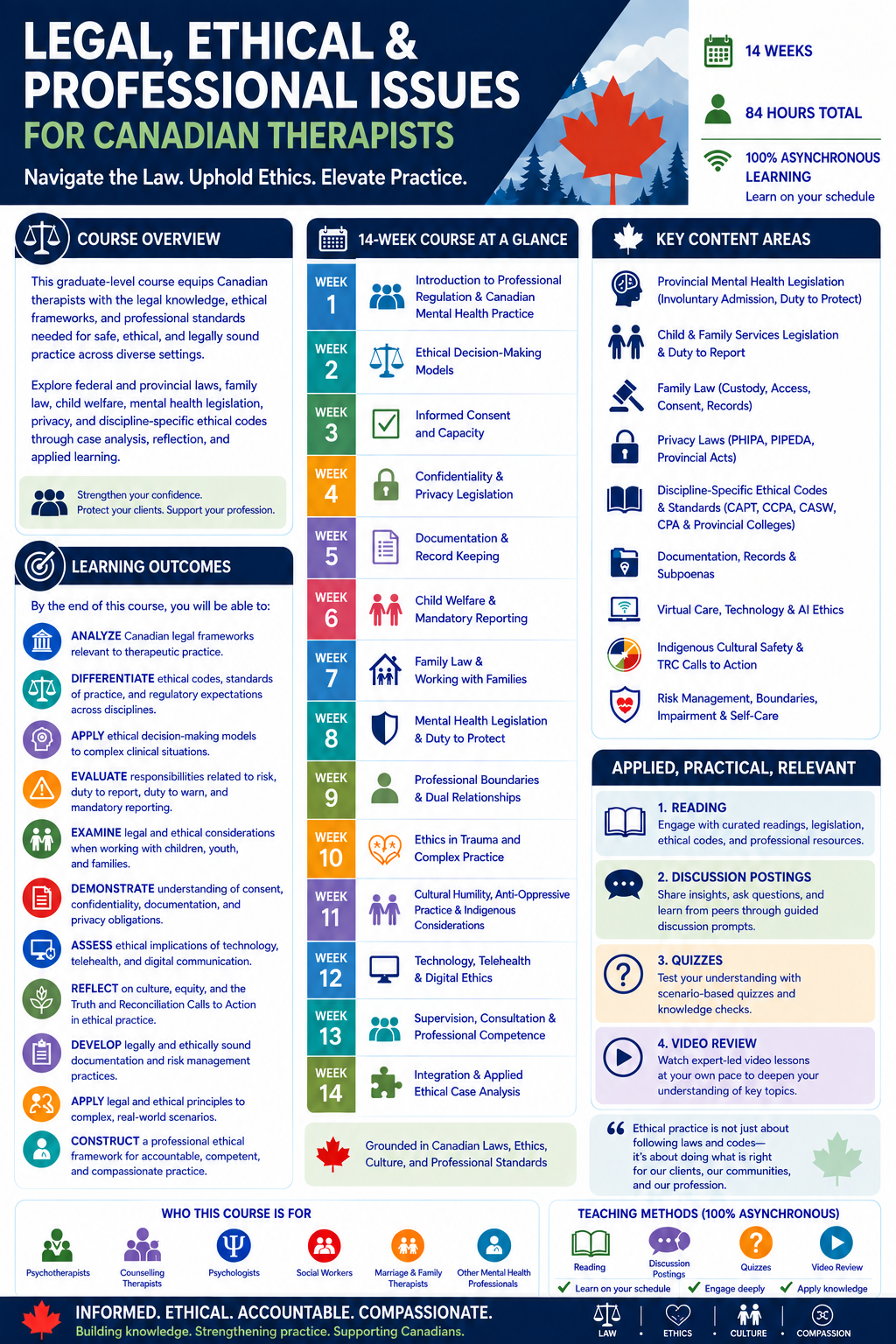
Legal, Ethical, and Professional Issues in Canadian Therapeutic Practice
An 84 hours (14-Week)Graduate-Level Course for Canadian Therapists
Course Description
This graduate-level course provides Canadian therapists with an in-depth exploration of the legal, ethical, and professional responsibilities that shape contemporary mental health practice across diverse clinical settings. Emphasizing Canadian federal and provincial contexts, the course examines the intersection of psychotherapy, counselling, social work, family systems, child welfare, mental health legislation, privacy law, documentation standards, and discipline-specific ethical codes and standards of practice.
Students will critically analyze ethical decision-making models, informed consent, confidentiality, mandatory reporting obligations, professional boundaries, record keeping, virtual care, cultural responsiveness, supervision, risk management, and interprofessional collaboration. Special attention is given to legal and ethical considerations involving children, youth, families, vulnerable populations, trauma-informed practice, and clinicians working in complex systems such as schools, hospitals, private practice, and community agencies.
Through case analysis, reflective exercises, legislation review, and applied ethical problem-solving, students will develop competencies necessary for safe, ethical, culturally responsive, and legally sound therapeutic practice within Canadian jurisdictions. The course integrates provincial regulatory expectations and national professional standards relevant to psychotherapists, counselling therapists, social workers, psychologists, and related mental health professionals.
Course Learning Outcomes
By the end of this course, participants will be able to:
-
Analyze Canadian legal frameworks relevant to therapeutic practice, including provincial mental health legislation, child welfare legislation, privacy laws, and family law considerations.
-
Differentiate the ethical codes, standards of practice, and regulatory expectations governing various Canadian mental health disciplines, including psychotherapy, counselling, psychology, and social work.
-
Apply ethical decision-making models to complex clinical situations involving confidentiality, consent, dual relationships, professional boundaries, documentation, and duty to report.
-
Evaluate therapist responsibilities related to risk assessment, duty to warn, duty to protect, suicide risk, abuse disclosure, and mandatory reporting obligations within Canadian jurisdictions.
-
Examine legal and ethical considerations in working with children, youth, families, and substitute decision-makers, including custody, parental consent, access to records, and child protection involvement.
-
Demonstrate understanding of informed consent processes across diverse practice contexts, including virtual therapy, trauma-informed care, and culturally responsive practice.
-
Assess the ethical implications of technology-assisted therapy, electronic communication, social media, telehealth, artificial intelligence tools, and digital record management.
-
Critically reflect on how culture, power, oppression, systemic inequities, and the Truth and Reconciliation Calls to Action influence ethical therapeutic practice in Canada.
-
Develop legally and ethically sound clinical documentation practices consistent with provincial legislation and professional regulatory expectations.
-
Examine ethical considerations related to supervision, consultation, interprofessional collaboration, competence, self-care, and impairment in professional practice.
-
Apply legal and ethical principles to case-based scenarios involving trauma, family conflict, child welfare, intimate partner violence, and complex mental health presentations.
-
Construct a professional ethical framework that integrates legislation, ethical standards, cultural humility, reflective practice, and professional accountability into clinical decision-making.
Course Description
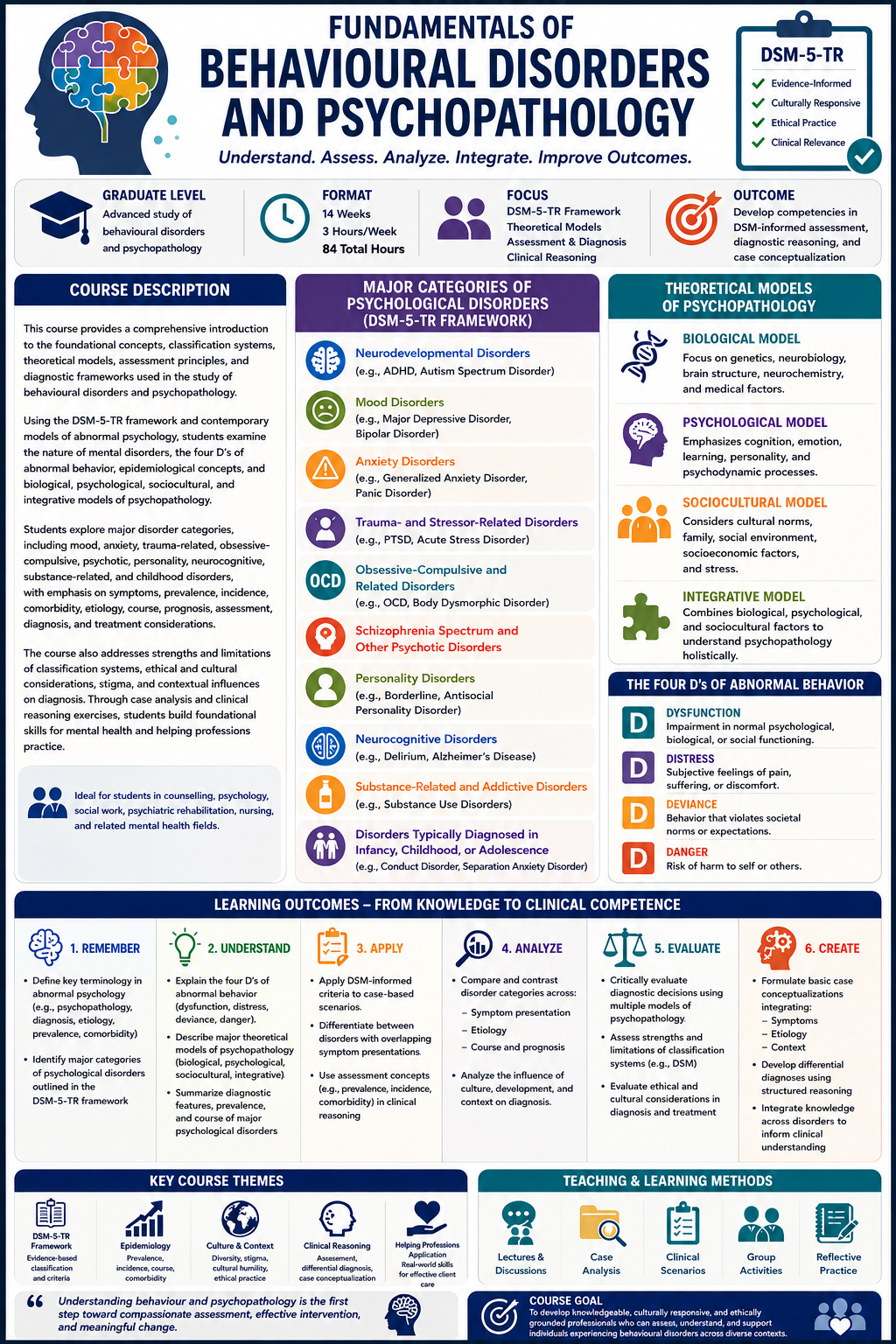
Fundamentals of Behavioural Disorders and Psychopathology
This graduate-level 14 week course provides students with a comprehensive introduction to the foundational concepts, classification systems, theoretical models, assessment principles, and diagnostic frameworks used in the study of psychological disorders and psychopathology. Using the DSM-5-TR framework and contemporary models of abnormal psychology, students will critically examine the nature of mental disorders, the four D’s of abnormal behavior (dysfunction, distress, deviance, and danger), epidemiological concepts, and the biological, psychological, sociocultural, and integrative models used to understand psychopathology.
Students will explore major categories of psychological disorders including mood disorders, anxiety disorders, trauma-related disorders, obsessive-compulsive disorders, psychotic disorders, personality disorders, neurocognitive disorders, substance-related disorders, and disorders of childhood. Emphasis is placed on understanding symptom presentation, prevalence, incidence, comorbidity, etiology, course, prognosis, assessment, diagnosis, and treatment considerations across disorders.
The course also examines the strengths and limitations of classification systems, ethical and cultural considerations in diagnosis, stigma, contextual influences on psychopathology, and the role of development and diversity in mental health assessment. Through case analysis, clinical reasoning exercises, differential diagnosis activities, and reflective discussion, students will develop foundational competencies in DSM-informed assessment, diagnostic reasoning, and case conceptualization for work in mental health and helping professions contexts.
Remember
-
Define key terminology in abnormal psychology including psychopathology, diagnosis, etiology, prevalence, and comorbidity
-
Identify major categories of psychological disorders outlined in the DSM-5-TR framework
Understand
-
Explain the four D’s of abnormal behavior (dysfunction, distress, deviance, danger)
-
Describe major theoretical models of psychopathology (biological, psychological, sociocultural, integrative)
-
Summarize diagnostic features, prevalence, and course of major psychological disorders
Apply
-
Apply DSM-informed criteria to case-based scenarios
-
Differentiate between disorders with overlapping symptom presentations
-
Use assessment concepts (e.g., prevalence, incidence, comorbidity) in clinical reasoning
Analyze
-
Compare and contrast disorder categories across:
-
Symptom presentation
-
Etiology
-
Course and prognosis
-
-
Analyze the influence of culture, development, and context on diagnosis
Evaluate
-
Critically evaluate diagnostic decisions using multiple models of psychopathology
-
Assess strengths and limitations of classification systems (e.g., DSM)
-
Evaluate ethical and cultural considerations in diagnosis and treatment
Create
-
Formulate basic case conceptualizations integrating:
-
Symptoms
-
Etiology
-
Context
-
-
Develop differential diagnoses using structured reasoning
-
Integrate knowledge across disorders to inform clinical understanding
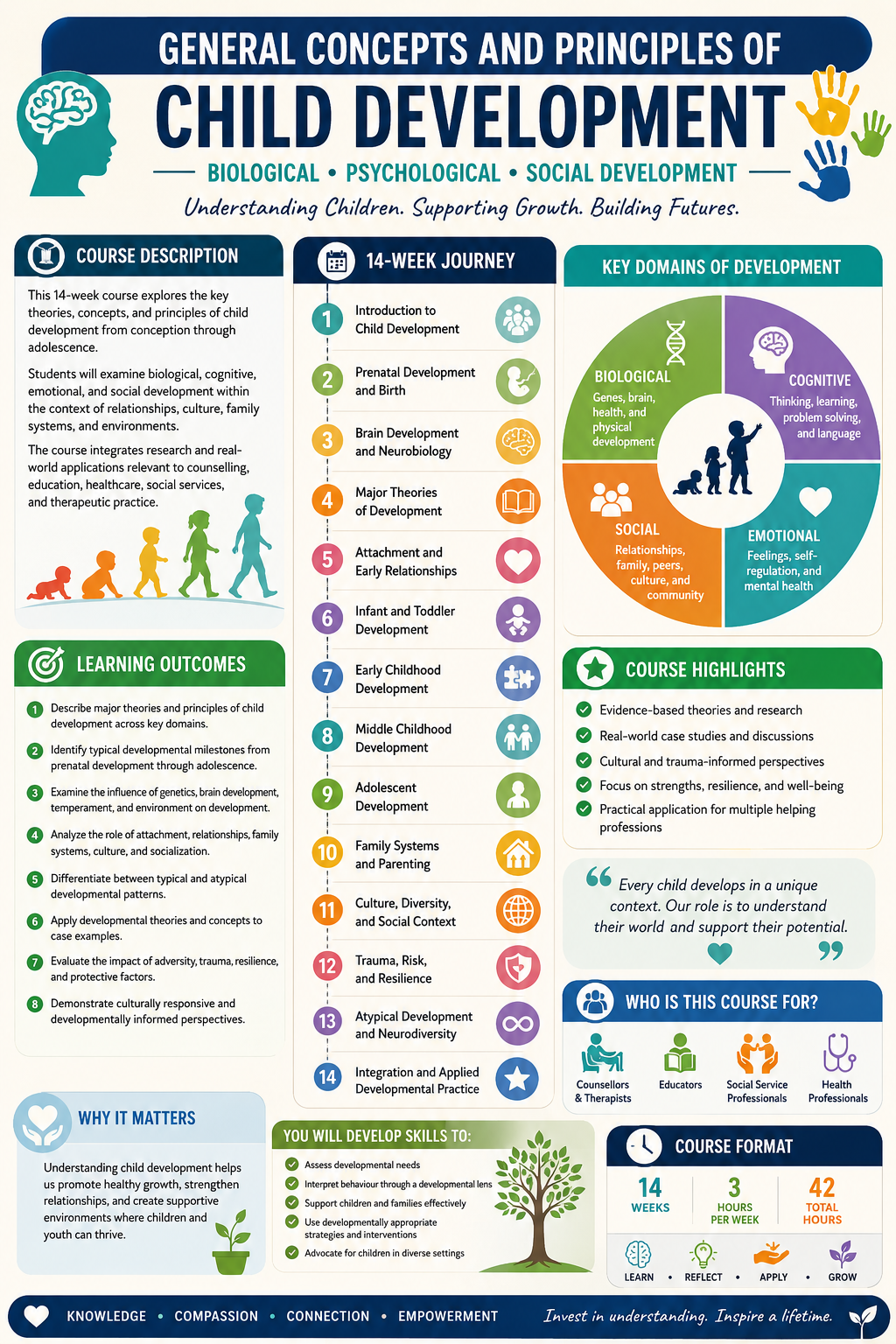
Course Description
This 14-week course provides students with a comprehensive introduction to the major concepts, theories, and principles of child development from conception through adolescence. Emphasis is placed on understanding the interconnected biological, psychological, cognitive, emotional, and social processes that influence development across childhood. Students will examine developmental milestones, attachment, brain development, temperament, learning theories, family systems, cultural influences, and the impact of adversity and resilience on developmental outcomes.
The course integrates foundational developmental theories with contemporary research and applied practice relevant to professionals working with children, youth, and families in educational, counselling, healthcare, social service, and therapeutic settings. Students will critically analyze developmental processes within diverse cultural and social contexts while exploring the influence of relationships, environment, trauma, and protective factors on child development.
Course Learning Outcomes
By the end of this course, students will be able to:
-
Describe major theories and principles of child development across biological, psychological, cognitive, emotional, and social domains.
-
Identify typical developmental milestones from prenatal development through adolescence.
-
Examine the influence of genetics, brain development, temperament, and environmental factors on child development.
-
Analyze the role of attachment, relationships, family systems, culture, and socialization in shaping developmental outcomes.
-
Differentiate between typical and atypical developmental patterns across childhood.
-
Apply developmental theories and concepts to case examples involving children and youth.
-
Evaluate the impact of adversity, trauma, resilience, and protective factors on developmental functioning.
-
Demonstrate culturally responsive and developmentally informed perspectives when working with children and families.
While not always front-of-mind in daily clinical practice, a solid working knowledge of the judicial, legislative, regulatory, and ethical framework within which counselling therapists practise is essential to professionalism, client welfare, and public protection. This module introduces counselling therapists to the legal and professional responsibilities that shape practice in Nova Scotia, including the Counselling Therapists Act, NSCCT regulatory expectations, professional conduct processes, scope of practice, title protection, informed consent, confidentiality, documentation, duty to report, competence, supervision, consultation, and ethical decision-making. Participants will examine how provincial legislation, regulatory standards, and the Canadian Counselling and Psychotherapy Association Code of Ethics and Standards of Practice inform daily clinical decisions. Emphasis is placed on translating legal and ethical expectations into practical safeguards that protect clients, support accountable practice, and reduce professional risk.
This two-hour continuing education workshop introduces counselling therapists to the concepts of Islamophobia, anti-discriminatory practice, cultural humility, and allyship within the therapeutic relationship. Participants will examine how personal assumptions, implicit bias, systemic discrimination, and societal narratives may influence clinical interactions and therapeutic outcomes. Using the Government of Canada's Canadian Guide to Understanding and Combatting Islamophobia, therapists will explore practical strategies for creating culturally safe and inclusive counselling environments for Muslim clients. The workshop emphasizes ethical practice, cultural responsiveness, social justice, and client-centred care consistent with professional standards and anti-oppressive counselling approaches
By the end of this workshop, participants will be able to:
Describe Islamophobia in the Canadian Context
Describe the nature, manifestations, and impacts of Islamophobia on individuals, families, communities, and mental health outcomes within Canada.
Bias and Discrimination in Clinical Practice
Identify how implicit bias, stereotypes, discrimination, and systemic barriers may affect therapeutic relationships and access to mental health services for Muslim clients.
Apply Anti-Discriminatory and Culturally Responsive Practices
Apply principles of cultural humility, anti-oppressive practice, and inclusive counselling approaches when working with Muslim clients and communities.
Strengthen Ethical and Socially Just Practice
Examine the ethical responsibilities of counselling therapists related to equity, diversity, inclusion, cultural responsiveness, advocacy, and client welfare.
Create Inclusive Therapeutic Environments
Develop practical strategies for fostering culturally safe, respectful, and welcoming counselling environments that support trust, belonging, and client well-being.
Anti-Racist and Anti-Discriminatory Practice: Intergeneratioal trauma
|
The CCPA Code of Ethics and Standards of Practice call on counselling therapists to promote social justice, the equitable distribution of resources, and act to reduce barriers and expand choice for all persons, with special regard for those who are marginalized, disadvantaged, vulnerable or have exceptional needs. The goal of this requirement is to support anti-oppressive practice, and to ensure that every counselling therapist can provide person-centered services with diverse communities that are culturally safe, humble, competent, responsive, and appropriate. |
|
|
-
training regarding inter-generational trauma

Anti-Racist and Anti-Discriminatory Practice: 2SLGBTQIA+
|
Registrants must accrue a minimum of 1 hour of Structured Learning or 2 hours of Self Study in this area. The CCPA Code of Ethics and Standards of Practice call on counselling therapists to promote social justice, the equitable distribution of resources, and act to reduce barriers and expand choice for all persons, with special regard for those who are marginalized, disadvantaged, vulnerable or have exceptional needs. The goal of this requirement is to support anti-oppressive practice, and to ensure that every   |
|
counselling therapist can provide person-centered services with diverse communities that are culturally safe, humble, competent, responsive, and appropriate. Approved topic areas include: |
2SLGBTQIA+
.
|
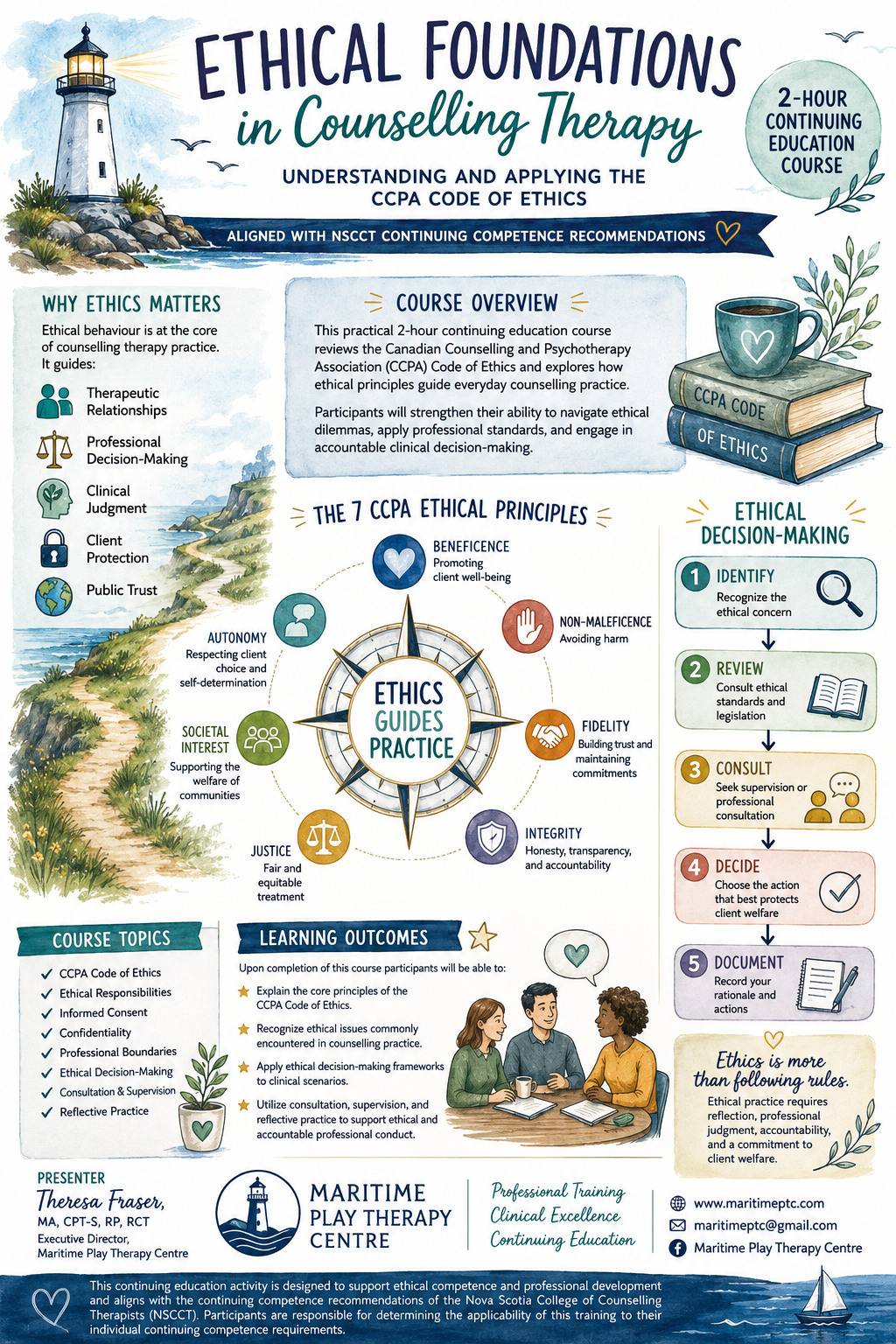
Professional Ethics |
|
Ethical behaviour is at the core of counselling therapy practice and forms the basis of the therapeutic relationship. It is part of everyday decision making, and paramount to guiding actions. We will review the CCPA Code of Ethics for Therapists. |
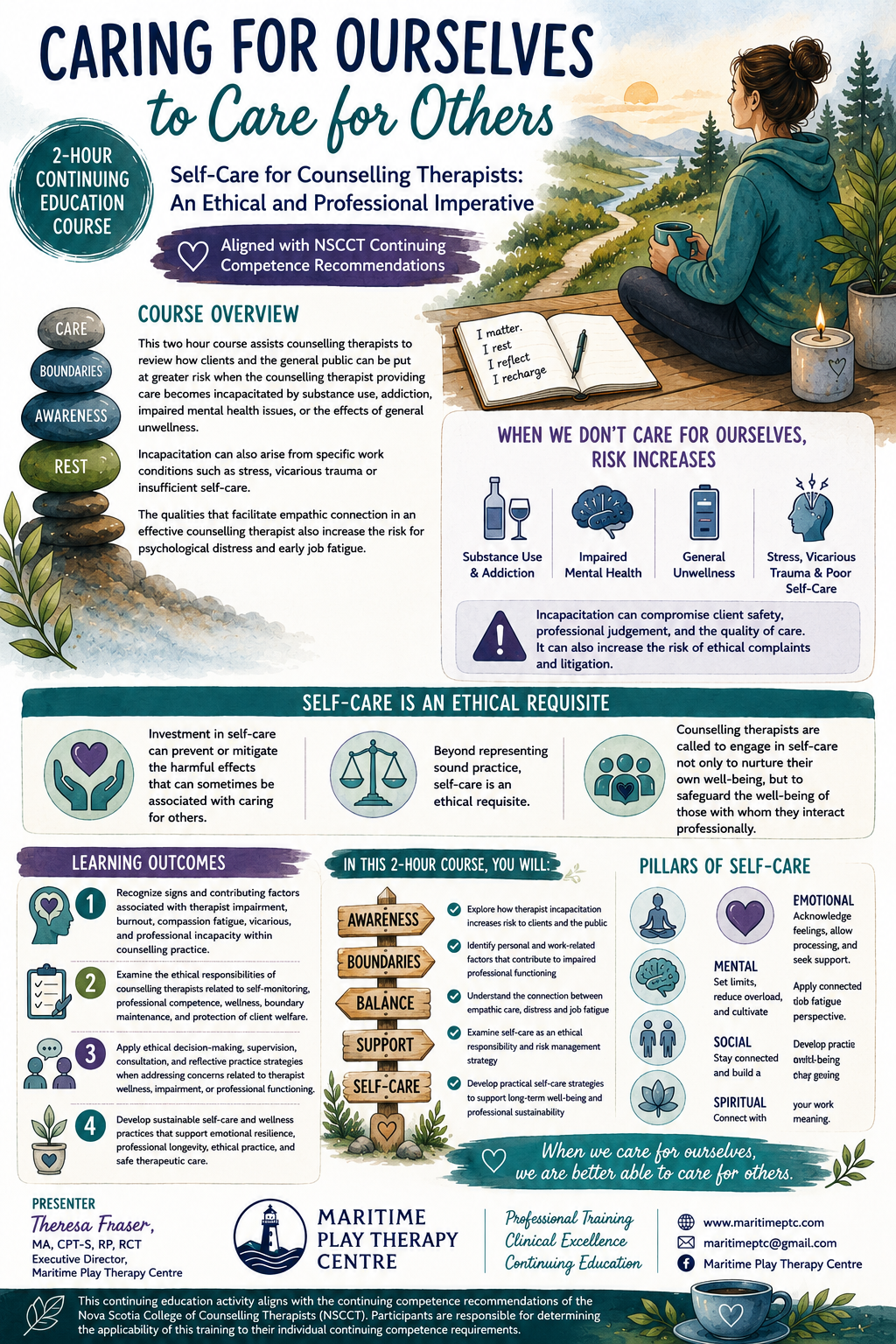
This two hours course assists the counselling therapists to review how clients and the general public can be put at greater risk when the counselling therapist providing care becomes incapacitated by substance use, addiction, impaired mental health issues, or the effects of general unwellness. Incapacitation can also arise from specific work conditions such as stress, vicarious trauma or insufficient self-care. The qualities that facilitate empathic connection in an effective counselling therapist also increase the risk for psychological distress and early job fatigue. Investment in self-care can prevent or mitigate the harmful effects that can sometimes be associated with caring for others.Beyond representing sound practice, self-care is an ethical requisite. Counselling therapists are called to engage in self-care not only to nurture their own well-being, but to safeguard the well-being of those with whom they interact professionally. Attention to self-care also may reduce the risk of ethical complaints and litigation.
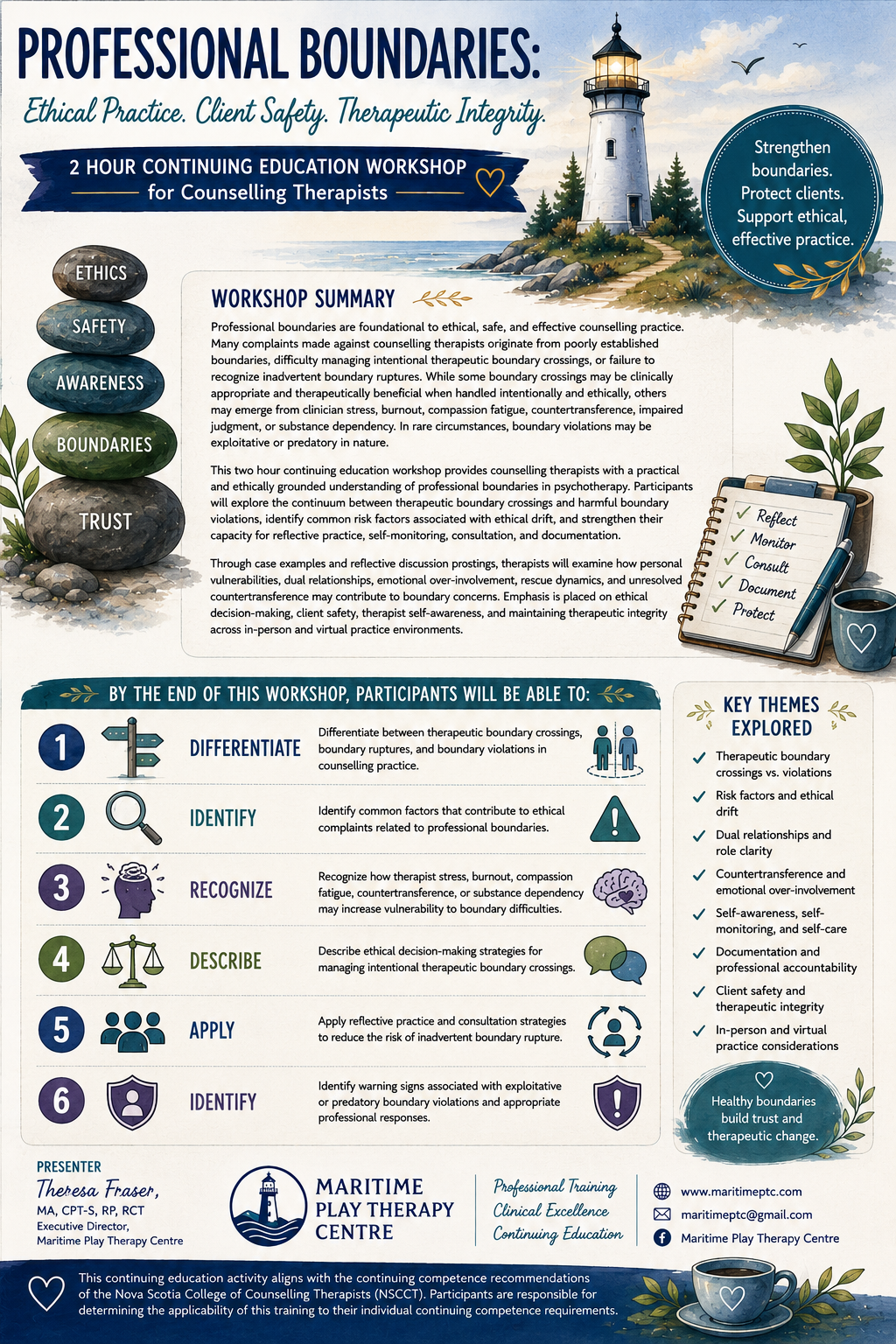
2 Hour Continuing Education Workshop for Counselling Therapists
Workshop Summary
Professional boundaries are foundational to ethical, safe, and effective counselling practice. Many complaints made against counselling therapists originate from poorly established boundaries, difficulty managing intentional therapeutic boundary crossings, or failure to recognize inadvertent boundary ruptures. While some boundary crossings may be clinically appropriate and therapeutically beneficial when handled intentionally and ethically, others may emerge from clinician stress, burnout, compassion fatigue, countertransference, impaired judgment, or substance dependency. In rare circumstances, boundary violations may be exploitative or predatory in nature.
This two hour continuing education workshop provides counselling therapists with a practical and ethically grounded understanding of professional boundaries in psychotherapy. Participants will explore the continuum between therapeutic boundary crossings and harmful boundary violations, identify common risk factors associated with ethical drift, and strengthen their capacity for reflective practice, self-monitoring, consultation, and documentation.
Through case examples and reflective discussion postings, therapists will examine how personal vulnerabilities, dual relationships, emotional over-involvement, rescue dynamics, and unresolved countertransference may contribute to boundary concerns. Emphasis is placed on ethical decision-making, client safety, therapist self-awareness, and maintaining therapeutic integrity across in-person and virtual practice environments.
Trauma-Informed Relational Therapeutic Play Approaches
Course Description
This module introduces trauma-informed principles and explores how trauma affects children's development, behaviour, attachment, and nervous system functioning. Participants learn how relational play experiences can support safety, regulation, connection, and resilience.
Learning Outcomes
-
Describe the impact of trauma on child development and behaviour.
-
Explain basic neurobiological responses to stress and trauma.
-
Identify trauma-informed principles applicable to therapeutic play.
-
Recognize signs of dysregulation and trauma activation.
-
Utilize relational play approaches that promote safety and trust including puppetry, game play and sensory activities.
Foundations of Therapeutic Play
Course Description
This module introduces participants to the historical, theoretical, and developmental foundations of therapeutic play. Participants will examine why play is considered a child's natural language and how play supports growth, communication, attachment, and emotional expression.
Learning Outcomes
Upon completion participants will be able to:
-
Describe the developmental significance of play across childhood.
-
Explain the therapeutic powers of play and their application in helping relationships.
-
Differentiate therapeutic play skills from play therapy.
-
Identify major theoretical influences on therapeutic play approaches.
-
Describe the role of the helping professional in facilitating therapeutic play experiences.
Child Development Through a Play Lens
Course Description
Participants examine child development from infancy through adolescence using a play-based perspective. Attention is given to developmental milestones, social-emotional growth, attachment, brain development, and how developmental challenges may be reflected through play.
Learning Outcomes
-
Describe major developmental milestones from infancy through adolescence.
-
Explain the relationship between development, attachment, and play.
-
Identify play behaviours associated with typical developmental stages.
-
Recognize developmental concerns that may influence children's play.
-
Adapt play-based interventions to developmental needs.
Responding to Challenging Behaviour Through Play
Course Description
Participants examine challenging behaviours through developmental, attachment, trauma-informed, and relational perspectives. Play-based strategies for responding to behavioural concerns are explored.
Learning Outcomes
-
Analyze challenging behaviours through a relational lens.
-
Differentiate between behavioural symptoms and underlying needs.
-
Apply therapeutic limit-setting strategies.
-
Utilize play interventions to address emotional and behavioural challenges.
-
Collaborate with caregivers and professionals regarding behavioural concerns.
Supporting Emotional Regulation Through Play
Course Description
This module focuses on emotional regulation, co-regulation, nervous system awareness, and resilience-building through play-based interventions.
Learning Outcomes
-
Explain the relationship between play and emotional regulation.
-
Identify indicators of dysregulation.
-
Facilitate co-regulation through therapeutic play experiences.
-
Utilize sensory-informed interventions to support regulation.
-
Develop play-based activities that enhance coping skills.
Therapeutic Play Modalities
Course Description
Participants are introduced to a variety of play-based approaches including expressive arts, storytelling, sandtray, puppet play, games, bibliotherapy, and sensory interventions.
Learning Outcomes
-
Describe a variety of therapeutic play modalities.
-
Match interventions to developmental and clinical needs.
-
Explain indications and limitations of different modalities.
-
Demonstrate basic skills in selected play-based interventions.
-
Integrate multiple therapeutic play approaches into practice.
The Language of Toys and Play Materials
Course Description
Participants learn how toys and play materials facilitate communication, symbolic expression, and emotional processing. The therapeutic meaning of play themes and toy selection are explored.
Learning Outcomes
-
Identify major categories of therapeutic play materials.
-
Explain how toys support symbolic communication.
-
Select developmentally appropriate play materials.
-
Recognize common themes expressed through play.
-
Utilize play materials intentionally within professional settings.
Applied Relational Play Skills (29 Hours)
Relational Therapeutic Play Skills
Course Description
Participants develop foundational therapeutic responses that strengthen connection, emotional safety, and attunement within play interactions.
Learning Outcomes
-
Demonstrate tracking, reflecting, and empathic responding skills.
-
Utilize therapeutic limit-setting strategies.
-
Foster emotional expression through relational play interactions.
-
Apply attunement and co-regulation skills during play sessions.
-
Evaluate how therapist use-of-self influences play interactions.
Integration and Applied Practice
Course Description
Participants synthesize learning from the program through case analysis, intervention planning, and reflective practice activities.
Learning Outcomes
-
Integrate developmental, relational, and trauma-informed concepts.
-
Analyze case scenarios using therapeutic play frameworks.
-
Develop comprehensive intervention plans.
-
Demonstrate reflective and ethical decision-making.
-
Evaluate the effectiveness of selected interventions.
Ethical Practice and Professional Boundaries
Course Description
Participants explore ethical, legal, and professional responsibilities associated with integrating therapeutic play skills into their work.
Learning Outcomes
-
Describe ethical responsibilities related to therapeutic play.
-
Practice within professional scope and competence.
-
Identify risks associated with boundary crossings.
-
Apply informed consent and confidentiality principles.
-
Utilize supervision and consultation appropriately.
Therapeutic Play in Different Cultural and Care Contexts
Course Description
Participants explore how culture, identity, diversity, family structure, and caregiving environments influence play and intervention planning.
Learning Outcomes
-
Demonstrate cultural humility in play-based work.
-
Recognize cultural influences on play behaviours.
-
Adapt interventions for diverse populations.
-
Examine bias and assumptions within practice.
-
Utilize inclusive and culturally responsive play approaches.
Contextual Integration (16 Hours)
Engaging Families and Caregivers Through Play
Course Description
This module examines the critical role of caregivers in children's growth and healing. Participants learn strategies for involving families in therapeutic and supportive play experiences.
Learning Outcomes
-
Explain the importance of caregiver involvement.
-
Utilize caregiver coaching and consultation strategies.
-
Teach therapeutic play skills to caregivers.
-
Identify barriers to caregiver engagement.
-
Develop collaborative approaches with families.
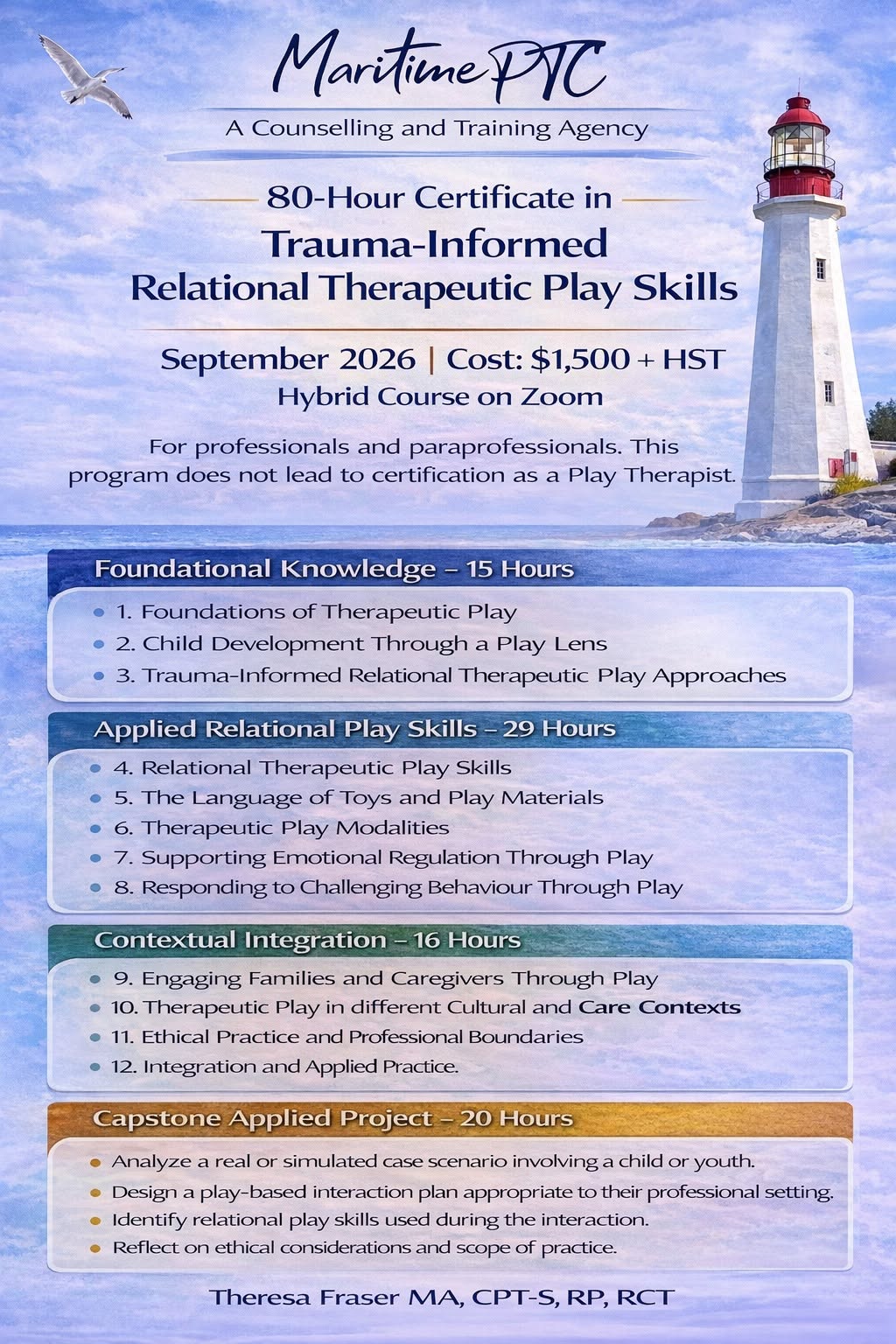 Capstone Applied Project (20 Hours)
Course Description
The Capstone Applied Project provides participants with the opportunity to integrate knowledge and skills acquired throughout the certificate program. Participants will analyze a real or simulated child or youth case, design an intervention plan, identify therapeutic play skills utilized, and reflect on ethical and professional considerations.
Participants will receive individualized feedback and participate in a final presentation process that supports integration of learning and professional growth.
Learning Outcomes
Upon successful completion participants will be able to:
-
Conduct a comprehensive analysis of a child or youth case scenario.
-
Identify developmental, relational, attachment, trauma, and contextual factors influencing the case.
-
Design a play-based intervention plan appropriate to their professional role.
-
Select and justify therapeutic play skills based on case needs.
-
Demonstrate culturally responsive and trauma-informed decision making.
-
Evaluate ethical and professional considerations related to the intervention plan.
-
Reflect on personal learning, professional growth, and future application of therapeutic play skills.
-
Communicate intervention planning and rationale through a professional presentation.