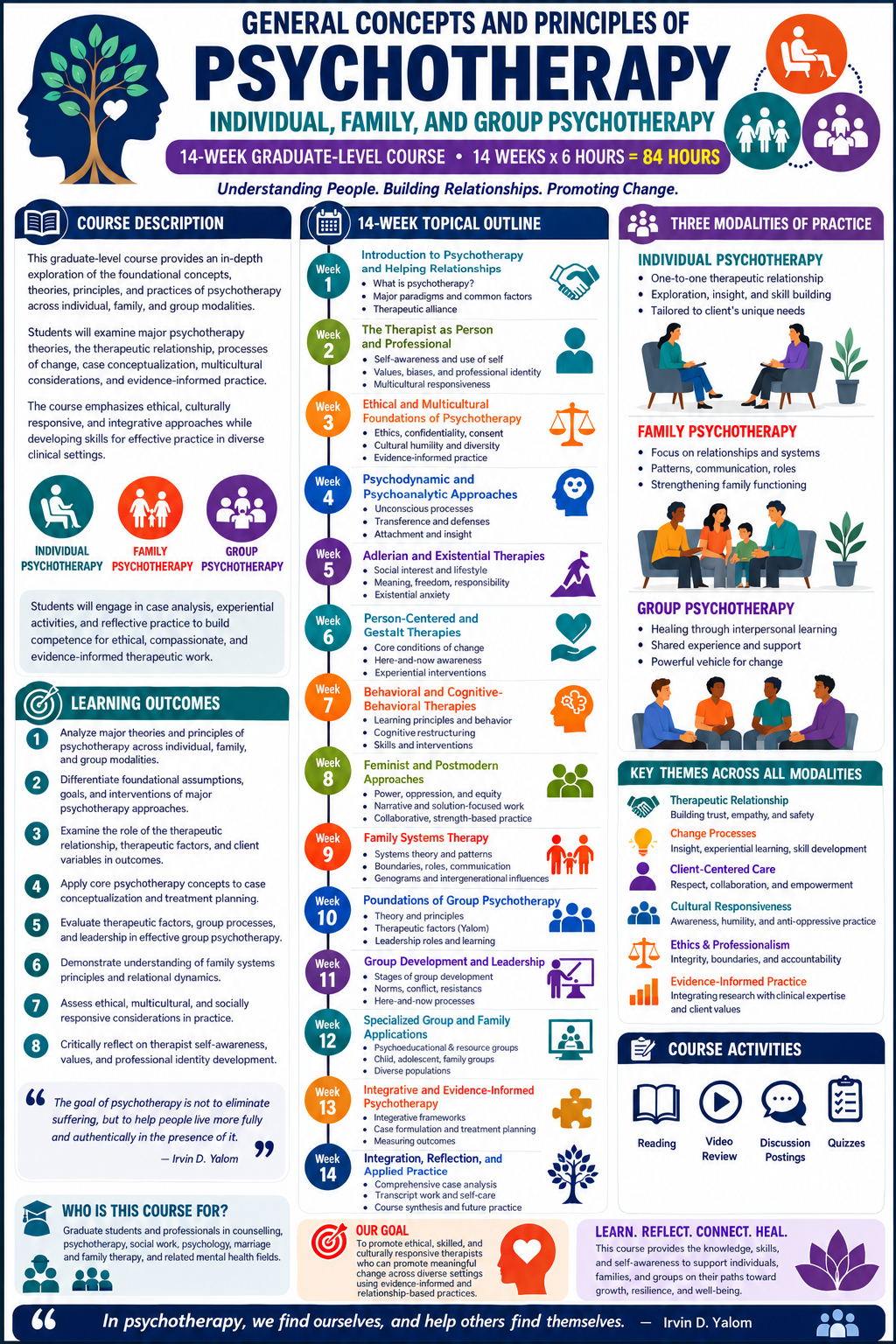
 Course Description
This graduate-level course provides students with a comprehensive introduction to the foundational concepts, theories, principles, and practices of psychotherapy across individual, family, and group modalities. Drawing from major psychotherapy traditions and integrative approaches, students will critically examine the therapeutic relationship, processes of change, case conceptualization, multicultural considerations, and evidence-informed psychotherapy practices.
The course introduces students to core psychotherapy theories including psychodynamic, Adlerian, existential, person-centered, Gestalt, cognitive-behavioral, feminist, postmodern, and family systems approaches while exploring the movement toward integrative psychotherapy practice. Emphasis is placed on understanding the therapeutic alliance, therapist self-awareness, ethical practice, multicultural responsiveness, and the mechanisms of therapeutic change across modalities.
Students will also examine foundational principles of group psychotherapy, including therapeutic factors, group cohesion, interpersonal learning, leadership, group development, and the role of the group as a therapeutic microcosm. Through experiential activities, case analysis, reflective practice, and applied clinical discussion, students will develop foundational competencies necessary for ethically and culturally responsive psychotherapy practice across diverse clinical contexts.
Course Learning Outcomes
By the end of this course, students will be able to:
-
Analyze major theories and principles of psychotherapy utilized in individual, family, and group practice.
-
Differentiate foundational assumptions, goals, therapeutic processes, and interventions associated with major psychotherapy models.
-
Examine the role of the therapeutic relationship, therapist factors, and client variables in psychotherapy outcomes.
-
Apply core psychotherapy concepts to case conceptualization and treatment planning across diverse clinical presentations.
-
Evaluate the therapeutic factors and interpersonal processes involved in effective group psychotherapy.
-
Demonstrate understanding of family systems principles and relational dynamics within psychotherapy practice.
-
Assess ethical, multicultural, and socially responsive considerations relevant to psychotherapy practice.
-
Critically reflect on therapist self-awareness, use of self, values, and professional identity development.
-
Examine integrative and evidence-informed approaches to psychotherapy across modalities.
-
Apply psychotherapy principles to case-based scenarios involving individual, family, and group clinical contexts.
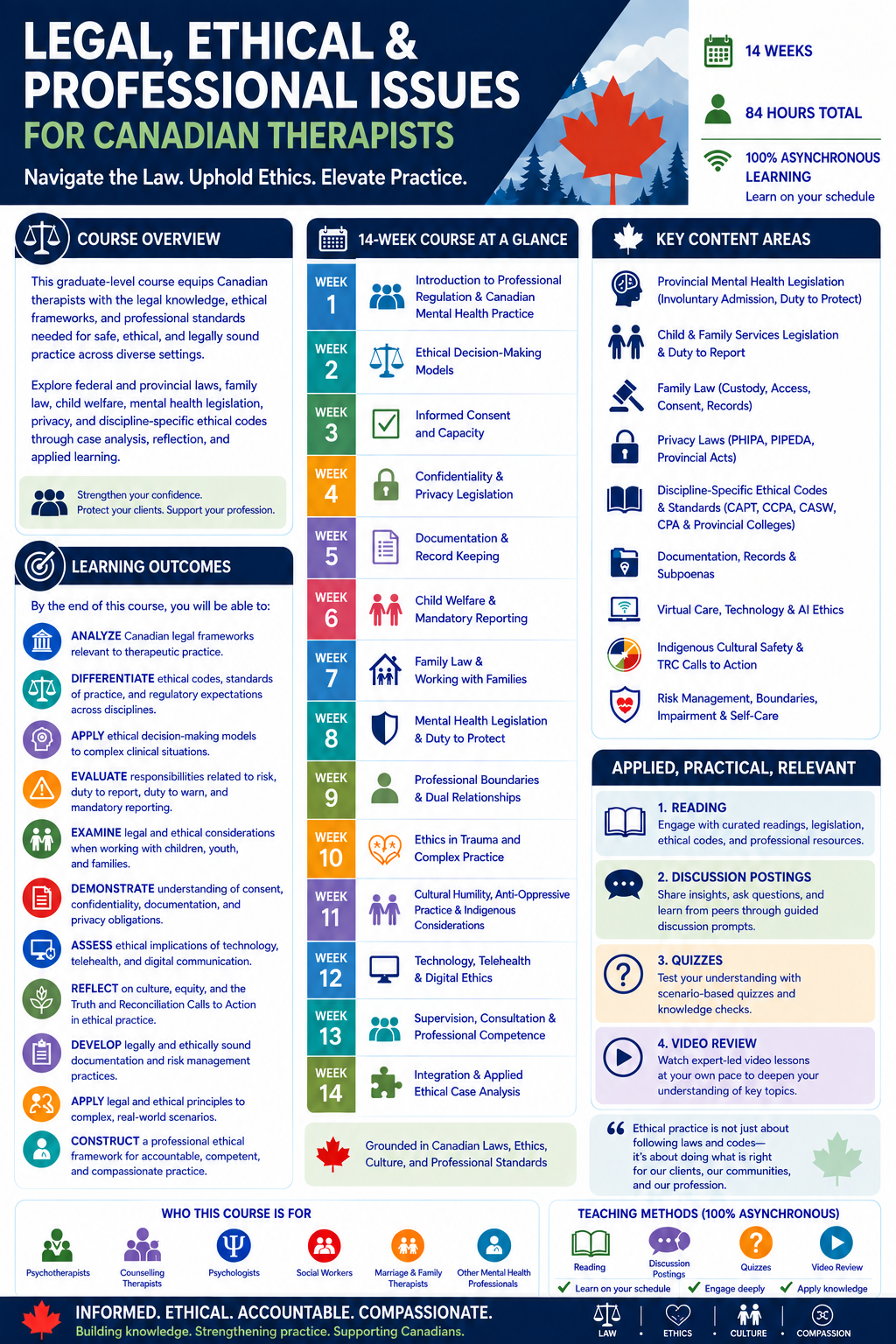
Legal, Ethical, and Professional Issues in Canadian Therapeutic Practice
An 84 hours (14-Week)Graduate-Level Course for Canadian Therapists
Course Description
This graduate-level course provides Canadian therapists with an in-depth exploration of the legal, ethical, and professional responsibilities that shape contemporary mental health practice across diverse clinical settings. Emphasizing Canadian federal and provincial contexts, the course examines the intersection of psychotherapy, counselling, social work, family systems, child welfare, mental health legislation, privacy law, documentation standards, and discipline-specific ethical codes and standards of practice.
Students will critically analyze ethical decision-making models, informed consent, confidentiality, mandatory reporting obligations, professional boundaries, record keeping, virtual care, cultural responsiveness, supervision, risk management, and interprofessional collaboration. Special attention is given to legal and ethical considerations involving children, youth, families, vulnerable populations, trauma-informed practice, and clinicians working in complex systems such as schools, hospitals, private practice, and community agencies.
Through case analysis, reflective exercises, legislation review, and applied ethical problem-solving, students will develop competencies necessary for safe, ethical, culturally responsive, and legally sound therapeutic practice within Canadian jurisdictions. The course integrates provincial regulatory expectations and national professional standards relevant to psychotherapists, counselling therapists, social workers, psychologists, and related mental health professionals.
Course Learning Outcomes
By the end of this course, participants will be able to:
-
Analyze Canadian legal frameworks relevant to therapeutic practice, including provincial mental health legislation, child welfare legislation, privacy laws, and family law considerations.
-
Differentiate the ethical codes, standards of practice, and regulatory expectations governing various Canadian mental health disciplines, including psychotherapy, counselling, psychology, and social work.
-
Apply ethical decision-making models to complex clinical situations involving confidentiality, consent, dual relationships, professional boundaries, documentation, and duty to report.
-
Evaluate therapist responsibilities related to risk assessment, duty to warn, duty to protect, suicide risk, abuse disclosure, and mandatory reporting obligations within Canadian jurisdictions.
-
Examine legal and ethical considerations in working with children, youth, families, and substitute decision-makers, including custody, parental consent, access to records, and child protection involvement.
-
Demonstrate understanding of informed consent processes across diverse practice contexts, including virtual therapy, trauma-informed care, and culturally responsive practice.
-
Assess the ethical implications of technology-assisted therapy, electronic communication, social media, telehealth, artificial intelligence tools, and digital record management.
-
Critically reflect on how culture, power, oppression, systemic inequities, and the Truth and Reconciliation Calls to Action influence ethical therapeutic practice in Canada.
-
Develop legally and ethically sound clinical documentation practices consistent with provincial legislation and professional regulatory expectations.
-
Examine ethical considerations related to supervision, consultation, interprofessional collaboration, competence, self-care, and impairment in professional practice.
-
Apply legal and ethical principles to case-based scenarios involving trauma, family conflict, child welfare, intimate partner violence, and complex mental health presentations.
-
Construct a professional ethical framework that integrates legislation, ethical standards, cultural humility, reflective practice, and professional accountability into clinical decision-making.
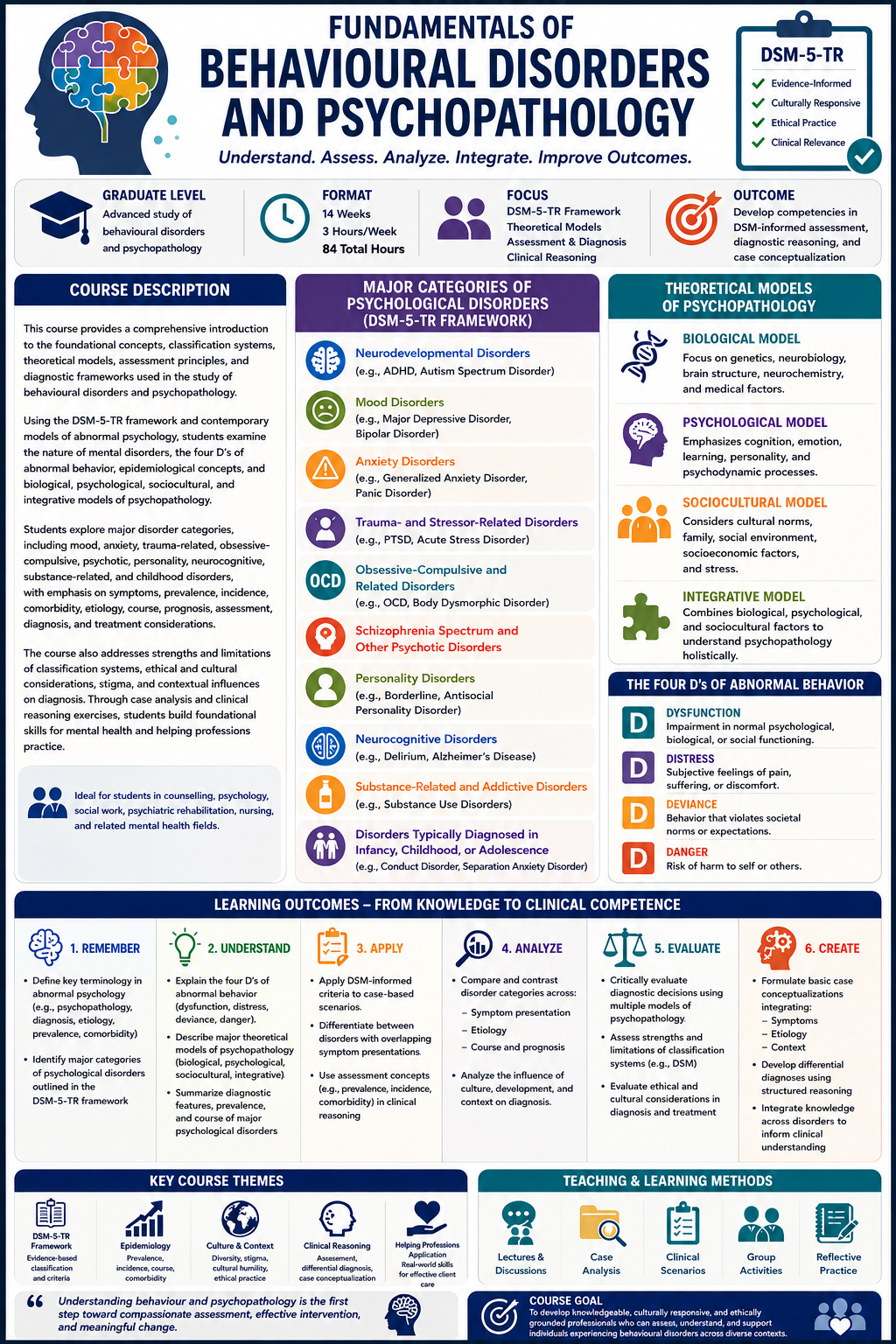
Course Description
Fundamentals of Behavioural Disorders and Psychopathology
This graduate-level 14 week course provides students with a comprehensive introduction to the foundational concepts, classification systems, theoretical models, assessment principles, and diagnostic frameworks used in the study of psychological disorders and psychopathology. Using the DSM-5-TR framework and contemporary models of abnormal psychology, students will critically examine the nature of mental disorders, the four D’s of abnormal behavior (dysfunction, distress, deviance, and danger), epidemiological concepts, and the biological, psychological, sociocultural, and integrative models used to understand psychopathology.
Students will explore major categories of psychological disorders including mood disorders, anxiety disorders, trauma-related disorders, obsessive-compulsive disorders, psychotic disorders, personality disorders, neurocognitive disorders, substance-related disorders, and disorders of childhood. Emphasis is placed on understanding symptom presentation, prevalence, incidence, comorbidity, etiology, course, prognosis, assessment, diagnosis, and treatment considerations across disorders.
The course also examines the strengths and limitations of classification systems, ethical and cultural considerations in diagnosis, stigma, contextual influences on psychopathology, and the role of development and diversity in mental health assessment. Through case analysis, clinical reasoning exercises, differential diagnosis activities, and reflective discussion, students will develop foundational competencies in DSM-informed assessment, diagnostic reasoning, and case conceptualization for work in mental health and helping professions contexts.
Remember
-
Define key terminology in abnormal psychology including psychopathology, diagnosis, etiology, prevalence, and comorbidity
-
Identify major categories of psychological disorders outlined in the DSM-5-TR framework
Understand
-
Explain the four D’s of abnormal behavior (dysfunction, distress, deviance, danger)
-
Describe major theoretical models of psychopathology (biological, psychological, sociocultural, integrative)
-
Summarize diagnostic features, prevalence, and course of major psychological disorders
Apply
-
Apply DSM-informed criteria to case-based scenarios
-
Differentiate between disorders with overlapping symptom presentations
-
Use assessment concepts (e.g., prevalence, incidence, comorbidity) in clinical reasoning
Analyze
-
Compare and contrast disorder categories across:
-
Symptom presentation
-
Etiology
-
Course and prognosis
-
-
Analyze the influence of culture, development, and context on diagnosis
Evaluate
-
Critically evaluate diagnostic decisions using multiple models of psychopathology
-
Assess strengths and limitations of classification systems (e.g., DSM)
-
Evaluate ethical and cultural considerations in diagnosis and treatment
Create
-
Formulate basic case conceptualizations integrating:
-
Symptoms
-
Etiology
-
Context
-
-
Develop differential diagnoses using structured reasoning
-
Integrate knowledge across disorders to inform clinical understanding
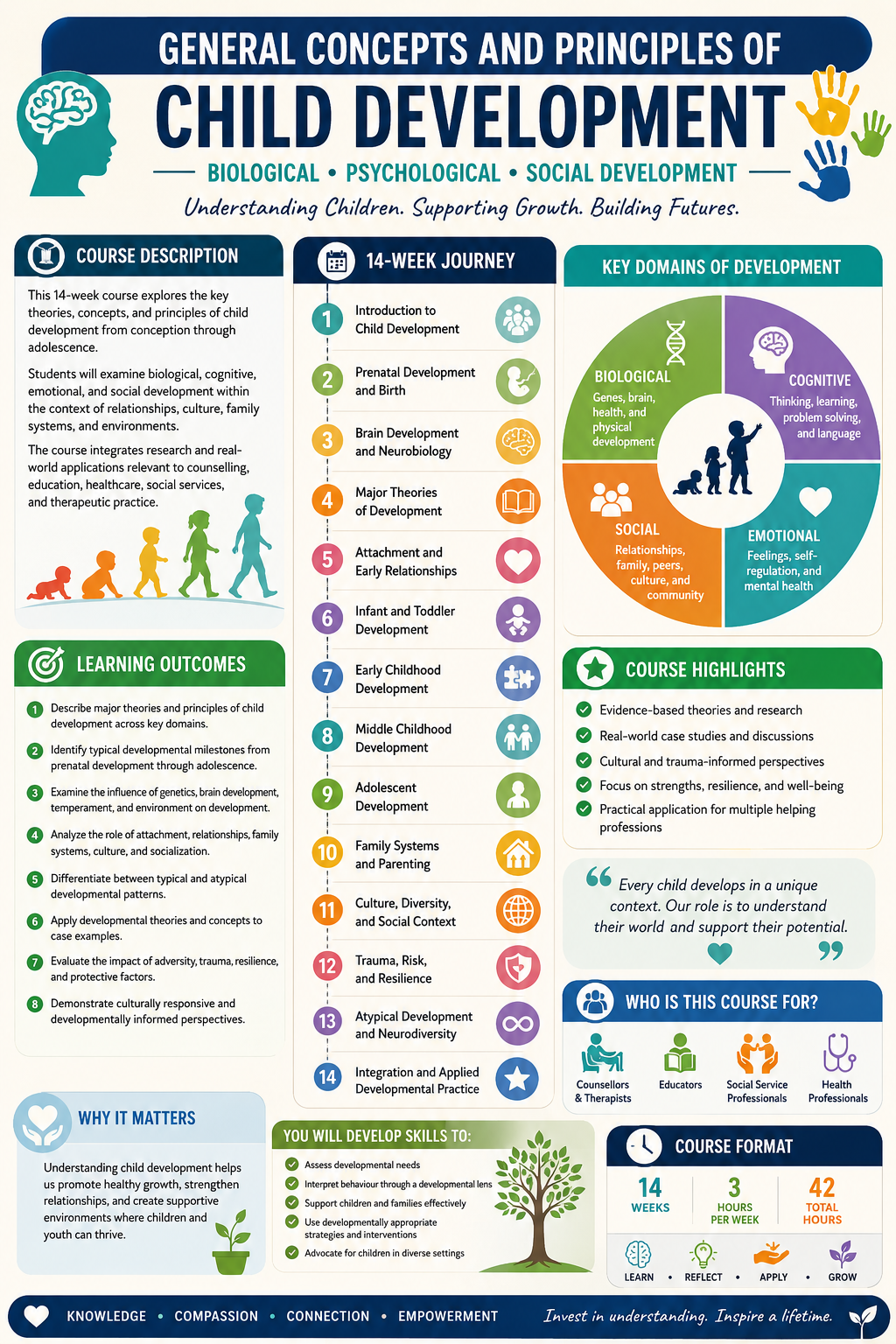
Course Description
This 14-week course provides students with a comprehensive introduction to the major concepts, theories, and principles of child development from conception through adolescence. Emphasis is placed on understanding the interconnected biological, psychological, cognitive, emotional, and social processes that influence development across childhood. Students will examine developmental milestones, attachment, brain development, temperament, learning theories, family systems, cultural influences, and the impact of adversity and resilience on developmental outcomes.
The course integrates foundational developmental theories with contemporary research and applied practice relevant to professionals working with children, youth, and families in educational, counselling, healthcare, social service, and therapeutic settings. Students will critically analyze developmental processes within diverse cultural and social contexts while exploring the influence of relationships, environment, trauma, and protective factors on child development.
Course Learning Outcomes
By the end of this course, students will be able to:
-
Describe major theories and principles of child development across biological, psychological, cognitive, emotional, and social domains.
-
Identify typical developmental milestones from prenatal development through adolescence.
-
Examine the influence of genetics, brain development, temperament, and environmental factors on child development.
-
Analyze the role of attachment, relationships, family systems, culture, and socialization in shaping developmental outcomes.
-
Differentiate between typical and atypical developmental patterns across childhood.
-
Apply developmental theories and concepts to case examples involving children and youth.
-
Evaluate the impact of adversity, trauma, resilience, and protective factors on developmental functioning.
-
Demonstrate culturally responsive and developmentally informed perspectives when working with children and families.