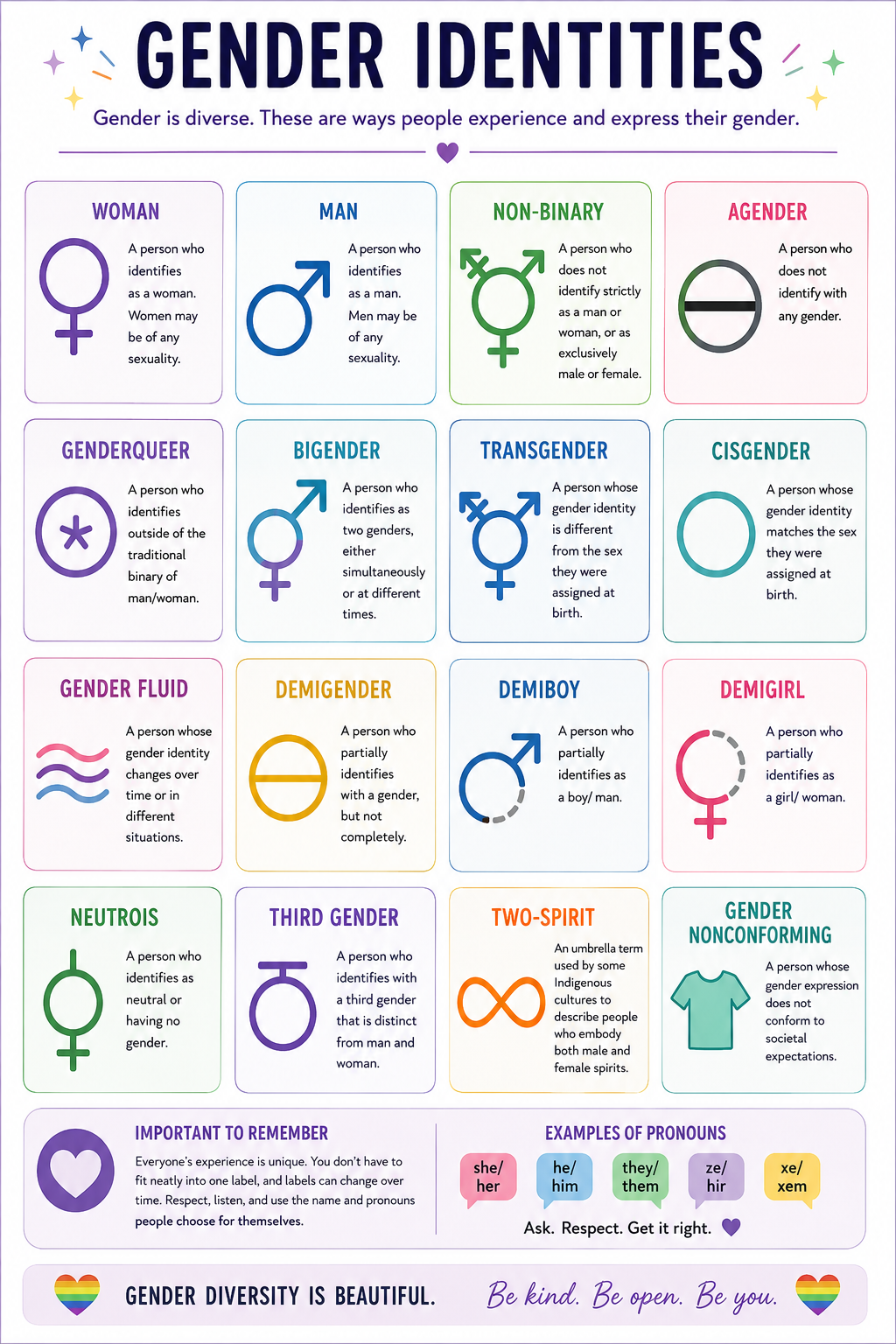
The World Professional Association for Transgender Health has specific standards of care and training protocols for those who provide care to children and adolescents who experience gender dysphoria. It is important however, for all therapists to be able to communicate verbally and non- verbally that gender expression is not binary.
This short training will assist therapists in assessing their therapy spaces, forms and practices to ensure that they are creating spaces for clients who may be questioning so they can feel safe in playing or exploring gender identity as well as being part of the LGBTQ+ Community.
Participants will be provided handouts in advance in order to review world-wide standards of care. They will also complete a self- screening practice assessment tool prior to the training.
Come prepared to complete a sandtray in dyads with a sandtray and a variety of miniatures on your end of the camera. You will leave hearing specific recommendations about how to make your therapy practice more inclusive.
Learning Outcomes:
· Play with and discuss own beliefs and attitudes about gender identity and gender expression using the sandtray and small group discussion
· Audit play therapy practice forms, spaces and healing tools for LGBTQ+ inclusion
· Identify ways to make your practice and play therapy spaces more LGBTQ+ inclusive.
· Engage in a gender activity recently published by the Australian medical community.
· Identify ways the play therapist can support families of questioning children and adolescents.
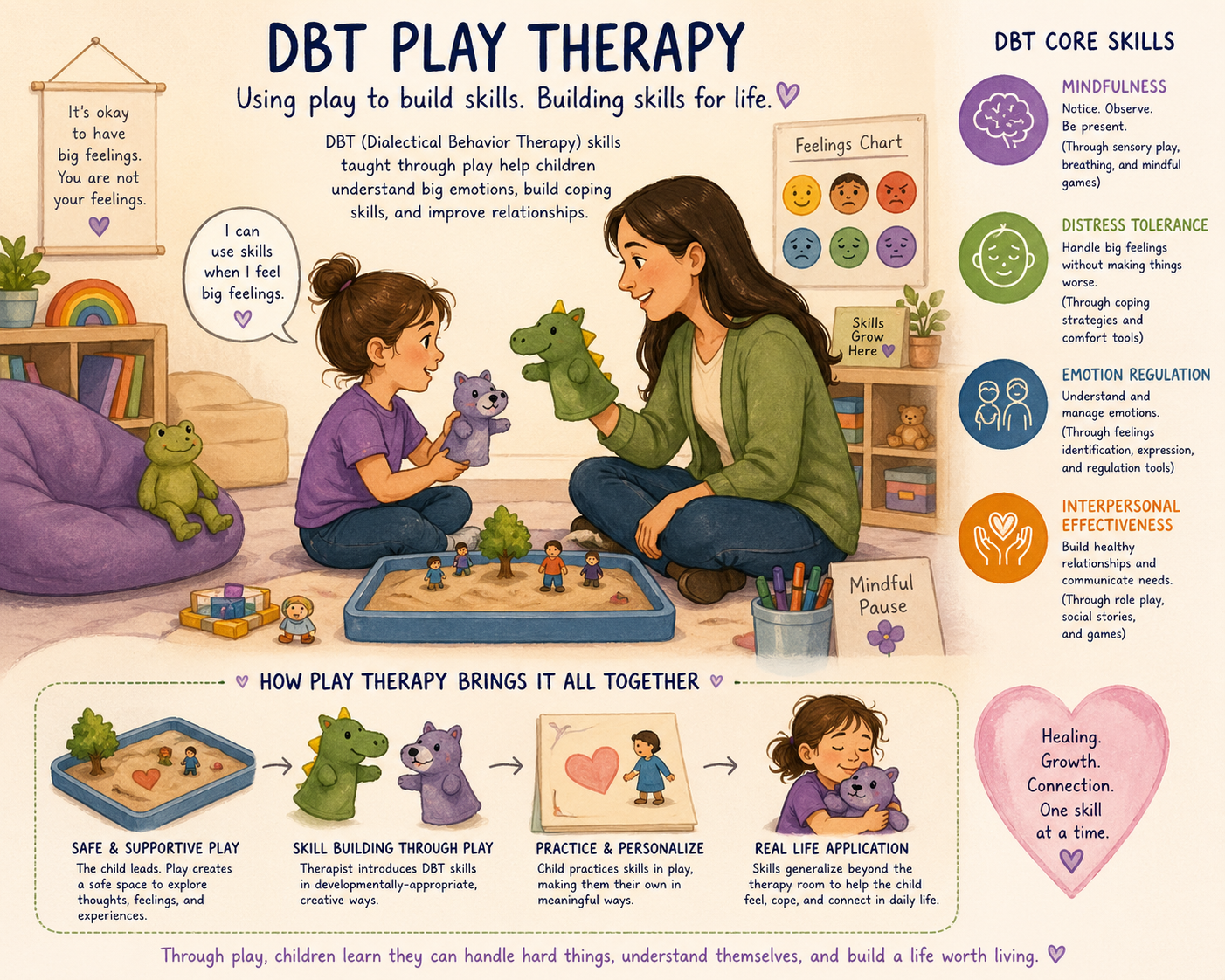
Integrating Dialectical Behavioural Concepts into your play therapy practice - DBPT
We can both accept ourselves for who we are while also accepting that change needs to happen (Linehan, 2015,p.5).
Adolescent and Adult clients can. utilize the sandtray as well as expressive modalities to communicate these dialectic realities while creating.a personal road map for change. This full day (6 hour) workshop will briefly review the treatment phases of Dialectical Behavioural Therapy while utilizing play therapy approaches to support DBT treatment.
Participants are expected to have taken prior DBT Training as this course does not certify participants in DBT or Marsha Linehan's method.
Learning Outcomes
After this training participants will:
Review DBT skills that can be integrated in individual PT or group PT therapy
Identify how the modules of mindfulness, interpersonal effectiveness, emotional regulation and distress tolerance can be integrated into their Play Therapy practice with sandtray, art based interventions, bibliotherapy, music, movement, affirmation cards and game play.
Utilize play therapy approaches in dyads, small and larger groups in order to gain confidence and competence in these DBT Areas
Identify resources or activities for DBPT they would like to further develop in order to continue to integrate DBT interventions formally or informally.
By the end of this training, participants will be able to
-
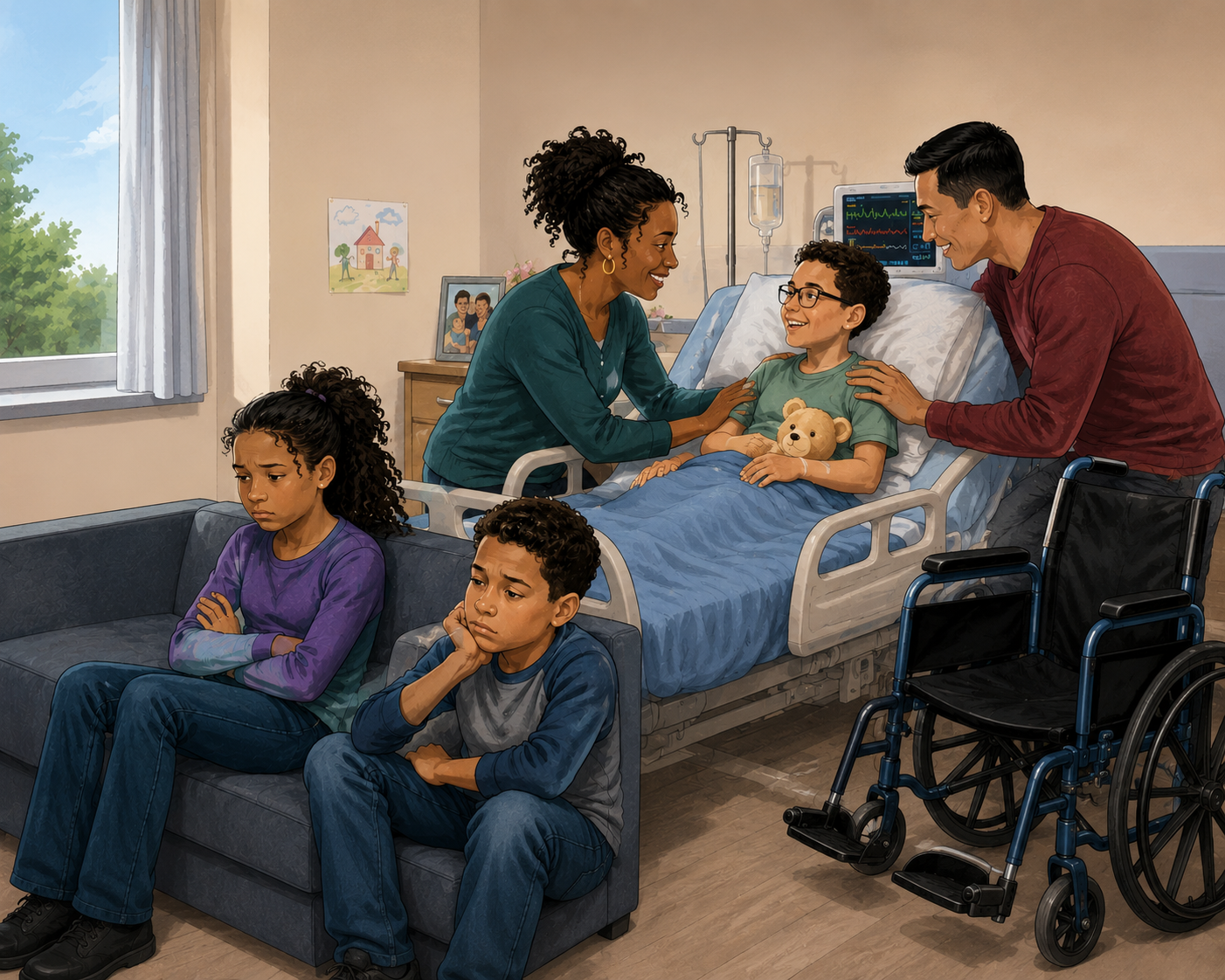
Define the concept of glass children and describe their unique psychosocial and developmental needs in play therapy. (Remembering / Understanding)
-
Explain the impact of family systems dynamics (e.g., parentification, invisibility, role assignment) on emotional development to be addressed in play therapy. (Understanding)
-
Analyze clinical presentations of glass children at the intake phase of play therapy. Design developmentally appropriate play-based interventions tailored to the needs of glass children. (Creating)
-
Identify IC-PTA competencies that are important to have and utilize when working with this population in play therapy.