Program Description
Many adult clients enter therapy presenting with concerns such as anxiety, relationship difficulties, emotional dysregulation, perfectionism, or chronic feelings of shame without recognizing how these patterns may be rooted in early attachment experiences. Attachment patterns formed in early caregiving relationships shape how individuals regulate emotion, perceive safety, connect with others, and understand themselves.
This 6-hour experiential workshop provides therapists with a practical framework for recognizing attachment-related patterns in adult clients who may not initially identify their difficulties as attachment-based. Participants will explore how early relational experiences influence adult coping strategies, interpersonal relationships, and internal working models.
Through case examples, reflective exercises, clinical discussion, and applied interventions, therapists will develop skills to identify attachment dynamics, conceptualize client struggles through an attachment lens, and introduce therapeutic interventions that support relational repair and emotional integration.
This training is appropriate for counsellors, psychotherapists, social workers, psychologists, and other mental health professionals who work with adult clients.
Learning Outcomes
-
Describe the core principles of attachment theory and the development of internal working models.
-
Explain how early relational experiences influence adult emotional regulation, relationship patterns, and identity development.
-
Identify common presenting issues in adult therapy that may reflect underlying attachment disruptions.
-
Apply attachment-informed case conceptualization to adult client scenarios.
-
Analyze adult relational patterns through the lens of attachment strategies (secure, anxious, avoidant, disorganized).
-
Differentiate between trauma responses and attachment adaptations in adult client behaviour.
-
Evaluate therapeutic interventions that support attachment repair in adult psychotherapy.
Develop attachment-informed therapeutic responses and interventions that increase emotional safety and relational awareness in adult clients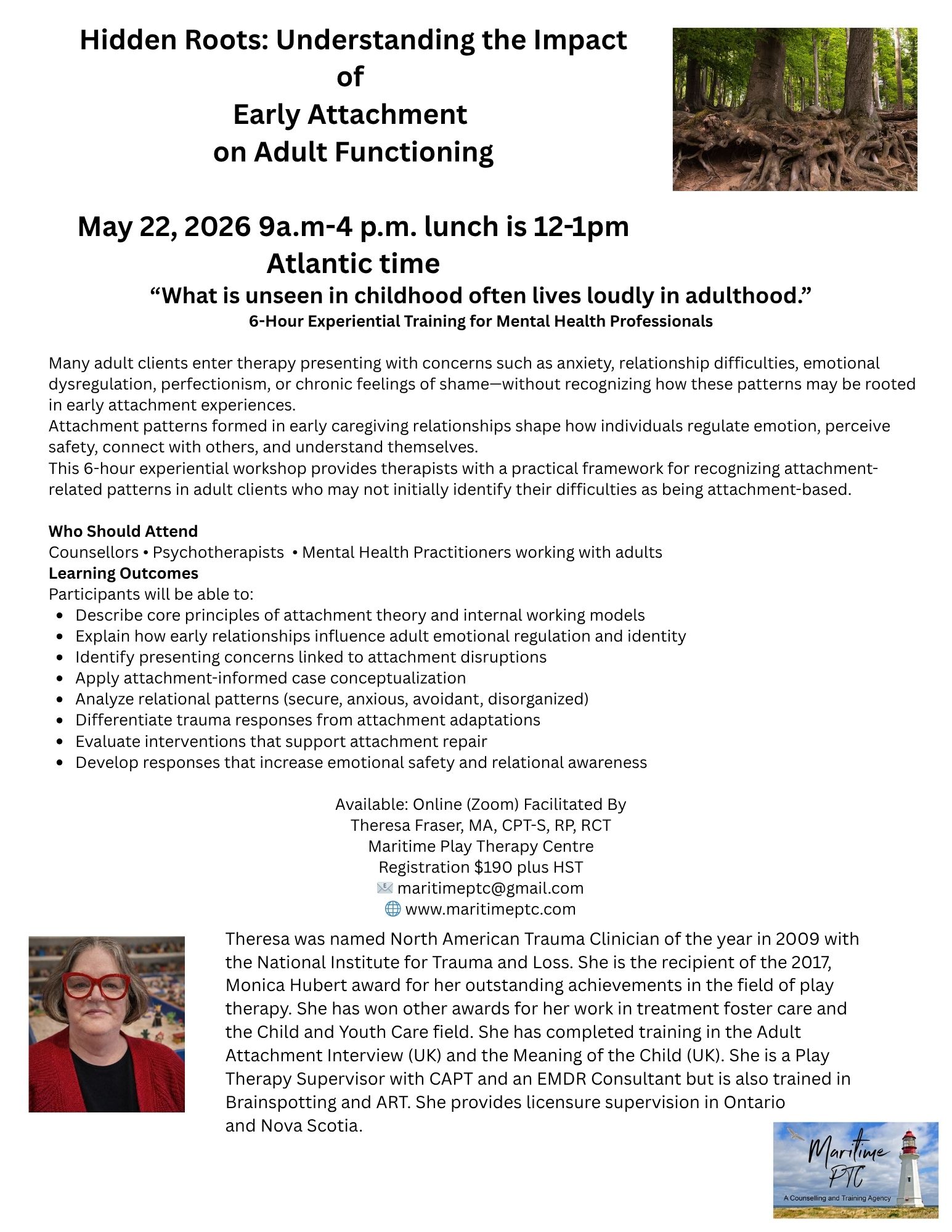
Course Description
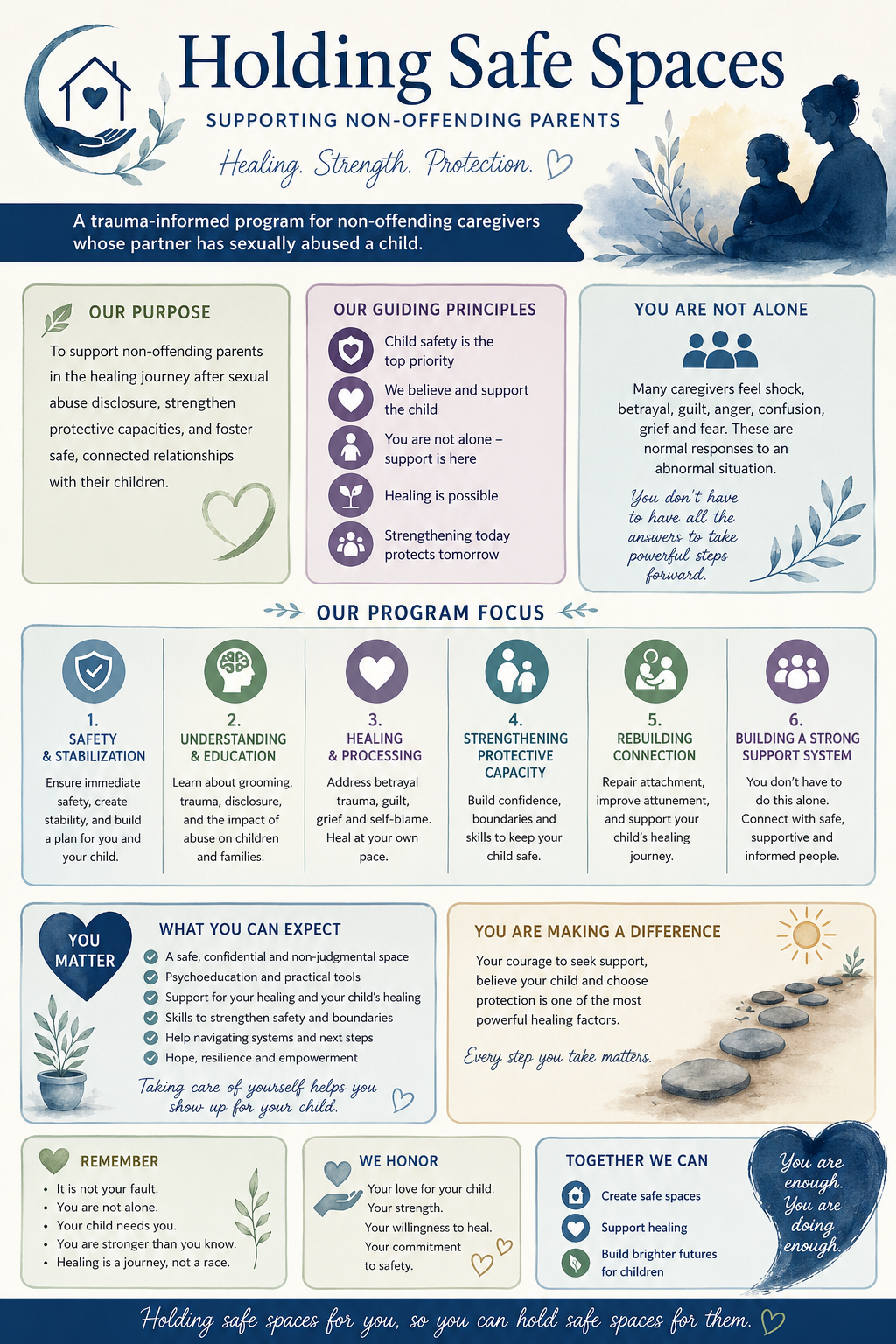
When a child discloses sexual abuse by a parent or caregiver, non-offending caregivers are often left navigating overwhelming experiences of shock, betrayal, grief, fear, guilt, confusion, and family disruption while simultaneously being asked to provide safety, stability, and emotional support for the child. Clinicians working with these families require specialized knowledge and trauma-informed intervention skills to effectively support both caregiver healing and child protection.
This training provides mental health professionals, social workers, victim service providers, and allied professionals with a comprehensive understanding of the complex dynamics involved in working with non-offending caregivers following intrafamilial child sexual abuse disclosure. Participants will explore grooming dynamics, family system patterns, attachment disruptions, trauma responses, protective caregiving capacities, and the emotional impact of disclosure on children and caregivers.
Using a trauma-informed, attachment-focused, and strengths-based framework, this course examines how clinicians can support caregiver stabilization, psychoeducation, emotional regulation, protective parenting, and relational repair while maintaining child safety as the central priority. Participants will also explore risk indicators, boundary violations, multidisciplinary collaboration, safety planning, mandatory reporting considerations, and culturally responsive approaches to intervention.
Through case examples, reflective discussion, and practical clinical tools, participants will gain increased confidence in assessing protective capacities, responding to caregiver distress, supporting healing conversations, and facilitating safe, compassionate, and accountable care within highly complex family systems.
This training is appropriate for therapists, counsellors, social workers, child protection professionals, victim service providers, school-based clinicians, and other helping professionals working with children, youth, and families impacted by sexual abuse.
Upon completion of this training, participants will be able to:
- Identify the dynamics, risk indicators, and grooming patterns commonly associated with intrafamilial child sexual abuse using a trauma-informed and developmentally responsive lens.
- Explain the emotional, behavioral, attachment-related, and neurobiological impacts of child sexual abuse disclosure on children, non-offending caregivers, and family systems.
- Assess caregiver protective capacities, safety concerns, boundary violations, and family system dynamics utilizing trauma-informed clinical assessment strategies and professional risk indicators.
- Demonstrate effective trauma-informed responses and psychoeducational interventions that support non-offending caregivers while prioritizing child safety, stabilization, and emotional regulation.
- Apply attachment-focused, culturally responsive, and strengths-based interventions to support caregiver-child relational repair, resilience, and long-term healing following disclosure.
- Develop collaborative treatment and safety planning strategies that integrate multidisciplinary systems, ethical responsibilities, mandatory reporting requirements, and ongoing protective caregiving supports.