

Description
Course Description
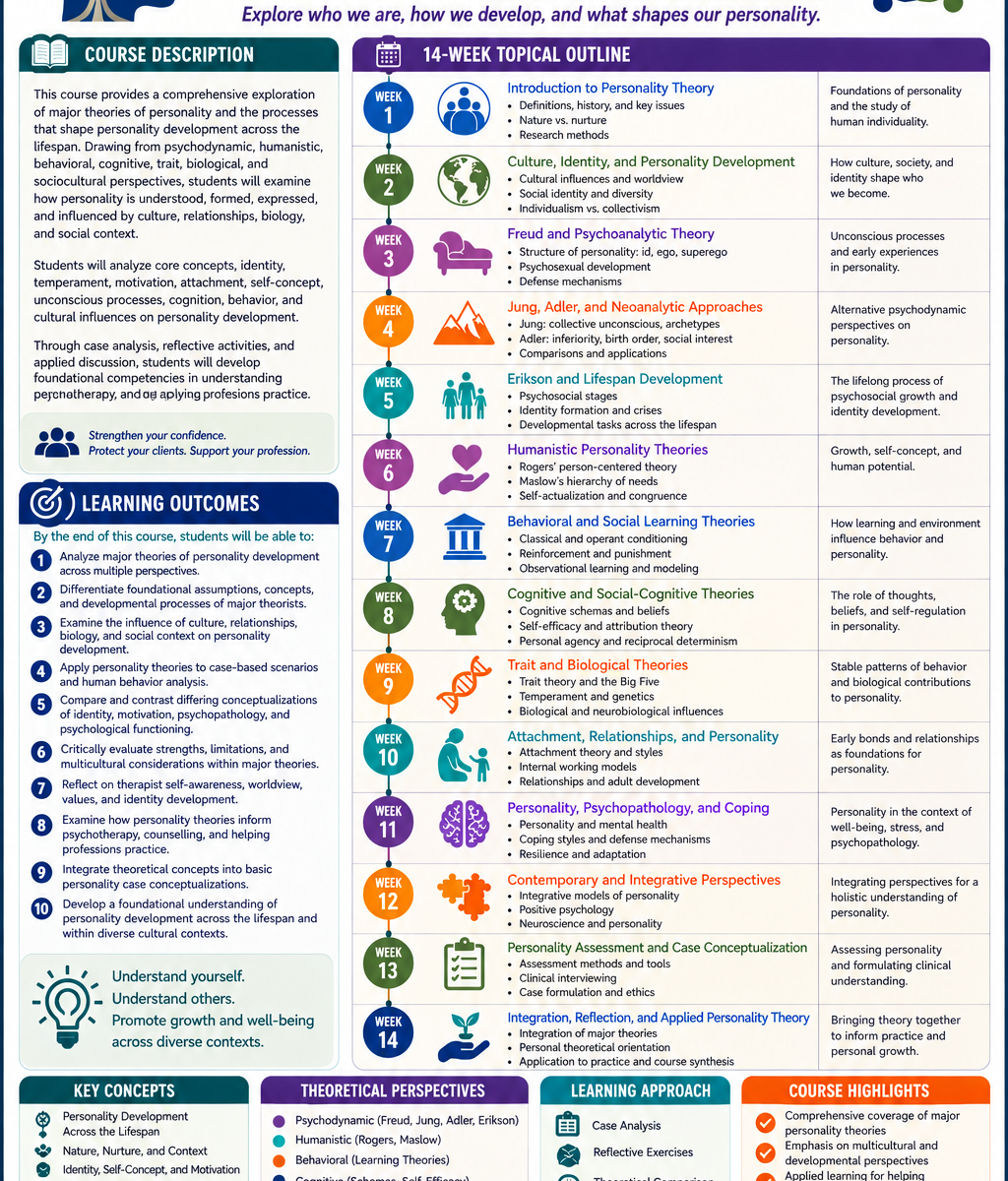
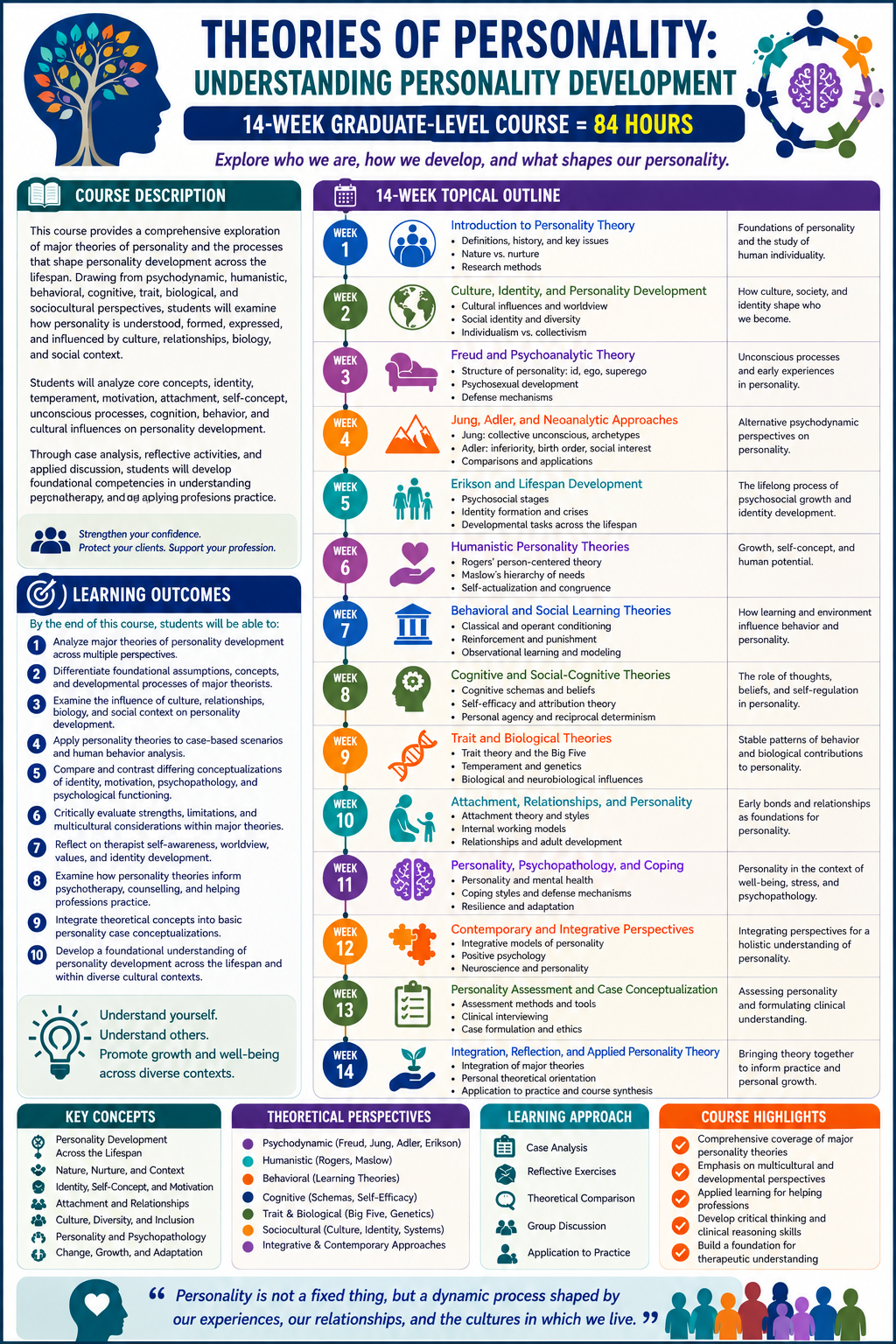
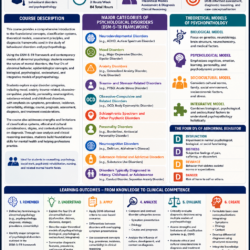
This 14 week course provides students with a comprehensive introduction to major theories, concepts, and research in personality psychology while critically examining the role of culture, identity, social context, and lived experience in personality development. Students will explore trait, psychodynamic, humanistic, existential, biological, behavioral, and cross-cultural perspectives on personality while examining personality assessment, personality stability, self-regulation, happiness, and personality disorders.
Special emphasis is placed on understanding how personality develops through the interaction of biology, environment, culture, relationships, spirituality, and social systems. Students will critically reflect on how cultural contexts shape identity, behavior, worldview, emotional expression, and psychological well-being across the lifespan.
Course Learning Outcomes
By the end of this course, students will be able to:
-
Analyze major theories and perspectives of personality psychology.
-
Compare trait, psychodynamic, humanistic, biological, and social-cognitive approaches to personality.
-
Examine how culture, family, spirituality, and social context influence personality development.
-
Explain the Five-Factor Model and alternative models of personality.
-
Assess personality stability and change across the lifespan.
-
Evaluate methods of personality assessment and their cultural implications.
-
Critically examine personality disorders using dimensional and contextual perspectives.
-
Explore the relationship between identity, self-regulation, happiness, and well-being.
-
Apply personality theories to real-world and case-based situations.
-
Reflect on how culture and lived experiences shape individual personality development.
Reviews
There are no reviews yet.